How We Got Here Genealogy

Blog

The Ultimate Guide to Scotland's New Online Records: Everything You Need to Succeed in 2025

Scotland's rich genealogical landscape has undergone a remarkable transformation in 2025, offering family historians unprecedented access to centuries of records with just a few clicks. Whether you're tracing Highland ancestors, Lowland farmers, or Scottish emigrants who made their way to Atlantic Canada, this year's expanded digital collections provide your secret weapon for breaking through those stubborn brick walls.

The days of travelling to Edinburgh or Glasgow to access crucial records are largely behind us. Today's Scottish genealogy researcher has a treasure trove of resources at their fingertips, from newly digitised parish registers to groundbreaking databases that weren't even imaginable a decade ago.

The Crown Jewel: ScotlandsPeople Gets Even Better

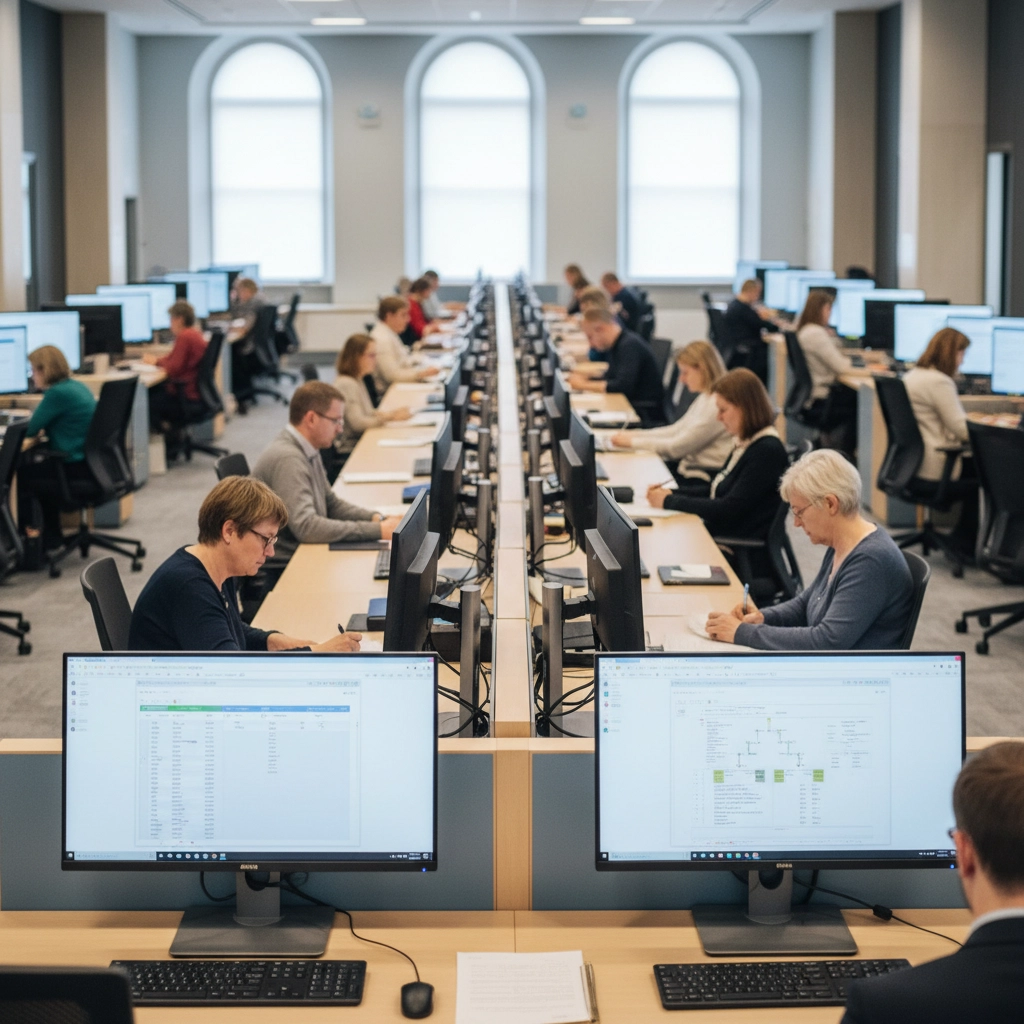
ScotlandsPeople remains the undisputed champion of Scottish genealogy platforms, and 2025 has brought significant enhancements that make it absolutely essential for serious researchers. Run by the National Records of Scotland, this isn't just another genealogy website: it's the official custodian of Scotland's historical records, making it your most reliable starting point.

What sets ScotlandsPeople apart is its unique blend of free searching with reasonably priced document access. You can search their extensive collections without spending a penny, then purchase high-quality scans of original documents only when you've found exactly what you need. It's like having a research assistant who lets you browse before you buy.

The platform's collections span civil registration records, parish registers, wills and testaments, valuation records, and much more. For genealogists working with Atlantic Canadian families, these records often provide the crucial Scottish origins that complete the immigration story.

image_1

FamilySearch: Your Free Scottish Research Powerhouse

Don't underestimate the power of free resources, particularly FamilySearch's Scottish collections. Their Scotland Births and Baptisms 1564-1950 and Scotland Marriages 1561-1910 indexes provide extraordinary value for researchers operating on any budget.

These collections primarily contain Church of Scotland records prior to 1855 and statutory records from 1856-1874/75. The beauty of FamilySearch lies in its accessibility: you can access these records from home or visit any FamilySearch centre for additional resources. For How We Got Here Genealogy Services clients, I often recommend starting here to establish basic family connections before investing in more specialised platforms.

The search functionality is robust, allowing you to cast wide nets for variant spellings of Scottish surnames or narrow your focus to specific parishes and time periods. Always cross-check your FamilySearch findings with other sources, but don't be surprised when these free records unlock significant breakthroughs.

Findmypast: The Scottish Specialist You Need to Know

Findmypast has positioned itself as the go-to platform for comprehensive Scottish research, and their 2025 collections represent the most extensive Scottish genealogy database available anywhere online. Their Scottish parish records collection spans four centuries and covers every parish in the country: a feat that would have been impossible just a few years ago.

What makes Findmypast particularly valuable is their partnerships with hundreds of family history societies, archives, and volunteers across Scotland. This collaborative approach has resulted in collections you simply won't find elsewhere, including:

  • Scottish Catholic Heritage Archive: Groundbreaking digitised parish registers covering all of Scotland's Catholic communities
  • Scotland Monumental Inscriptions: The largest online collection of cemetery and gravestone records
  • Civil and Modern Records: Comprehensive birth, marriage, death, and burial records from 1855 to 2021
  • Poor Law and Poor Lists: Often overlooked records that document ancestors who faced hardship

The Poor Law records deserve special attention from Atlantic Canadian researchers. These documents frequently capture individuals who might not appear in traditional church or civil records, often providing crucial details about families preparing for emigration.

image_2

Hidden Gems: Scottish Indexes and Community Resources

While the major platforms grab headlines, some of the most valuable Scottish research happens through specialised community resources. Scottish Indexes offers detailed free indexes of National Records of Scotland materials that would otherwise be difficult to access, including paternity cases and asylum records.

These indexes serve as excellent reconnaissance tools. You can search freely to identify promising records, then purchase scans of original documents when you've confirmed a match. It's a cost-effective approach that professional genealogists have used for years.

The National Library of Scotland's Internet Archive platform deserves recognition as a hidden gem. Their freely available collections include published family histories, military lists for the British Army, RAF, and Royal Navy, rolls of honour, gazetteers, and over a thousand Post Office directories. For researchers tracing Scottish military service or seeking geographical context, this resource is invaluable.

Navigating Regional and Local Resources

Scotland's diverse regions each offer unique research challenges and opportunities. Local archive platforms like the Friends of Dundee City Archives provide transcribed church records, burial records, burgh registers, trade directories, school records, and Poor Law registers specific to particular areas.

Don't overlook platforms like Electric Scotland and Virtual Mitchell, which offer community-driven access to Scottish genealogy materials. While these resources require more careful verification than official archives, they often contain transcriptions and materials unavailable elsewhere.

The key to success with regional resources is understanding which specific locations and dates are covered by each collection. Before diving deep into research, verify the geographical and temporal scope of your chosen databases.

image_3

Strategies for Success in 2025

Modern Scottish genealogy research requires a multi-platform approach. Start with free resources like FamilySearch to establish basic family connections, then use ScotlandsPeople for official documentation, and supplement with Findmypast's specialised collections for comprehensive coverage.

Keep a meticulous research log noting which platforms you've searched, what terms you've used, and what results you've found. Scottish record-keeping varied significantly between regions and time periods, so systematic searching prevents overlooking crucial information.

Be open to exploring different record types. Scottish genealogy offers far more than birth, marriage, and death records. Kirk session records, heritors' records, school registers, and trade guild memberships can provide rich detail about ancestors' daily lives.

Use translation tools when necessary. Older Scottish records, particularly from the Highlands and Islands, may contain Gaelic terms or archaic Scottish terminology that modern researchers find challenging.

Making Sense of Scottish Record Keeping

Understanding Scottish record-keeping practices enhances your research effectiveness dramatically. Scotland's civil registration began in 1855, making it one of the first countries to implement comprehensive vital statistics recording. However, this late start means parish records remain crucial for earlier research.

Scottish parish records vary significantly in quality and completeness. Lowland parishes generally maintained better records than Highland communities, where oral tradition remained strong well into the 19th century. Border regions experienced particular challenges due to frequent conflicts and political upheaval.

The relationship between church and state in Scotland created unique record-keeping patterns. Established Church of Scotland parishes maintained official records, while dissenting congregations, Catholics, and other denominations created parallel documentation systems. Modern digital collections increasingly capture these diverse religious traditions.

Building Your Scottish Research Foundation

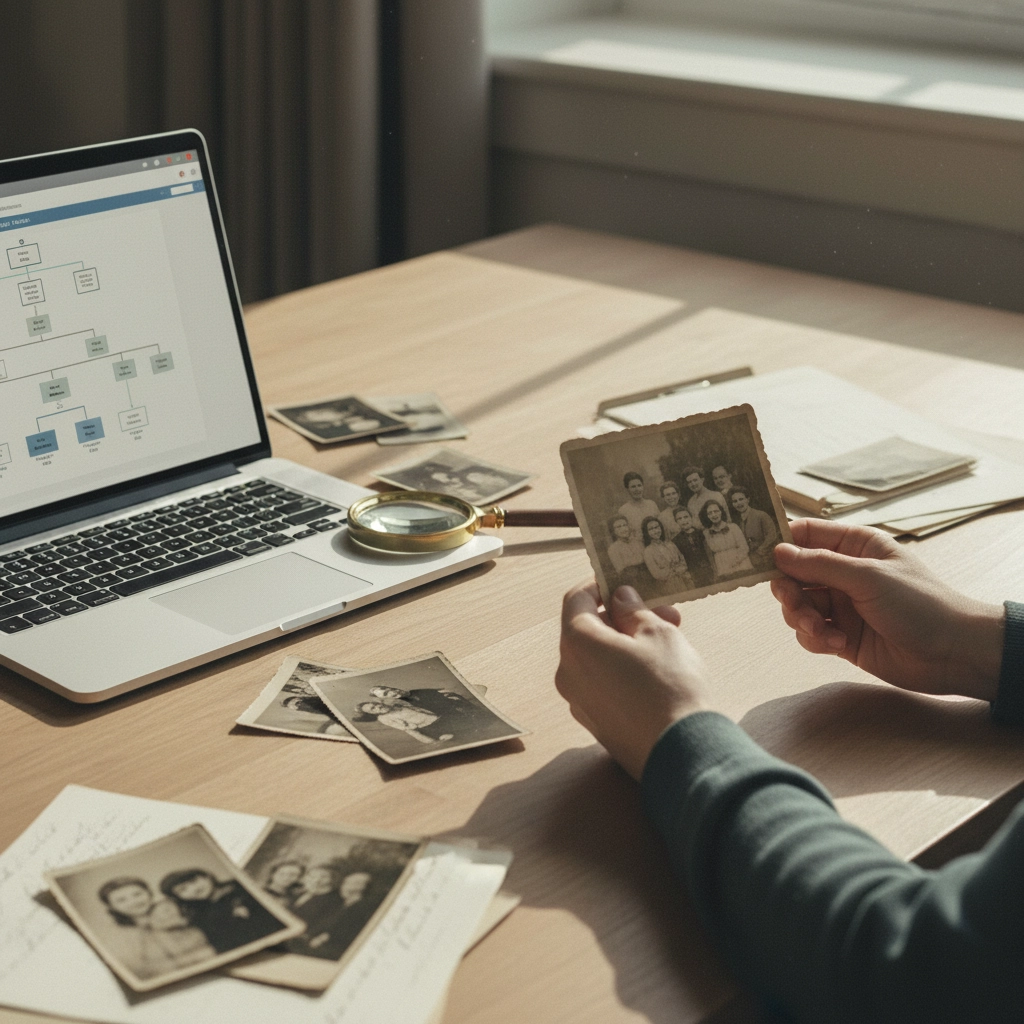
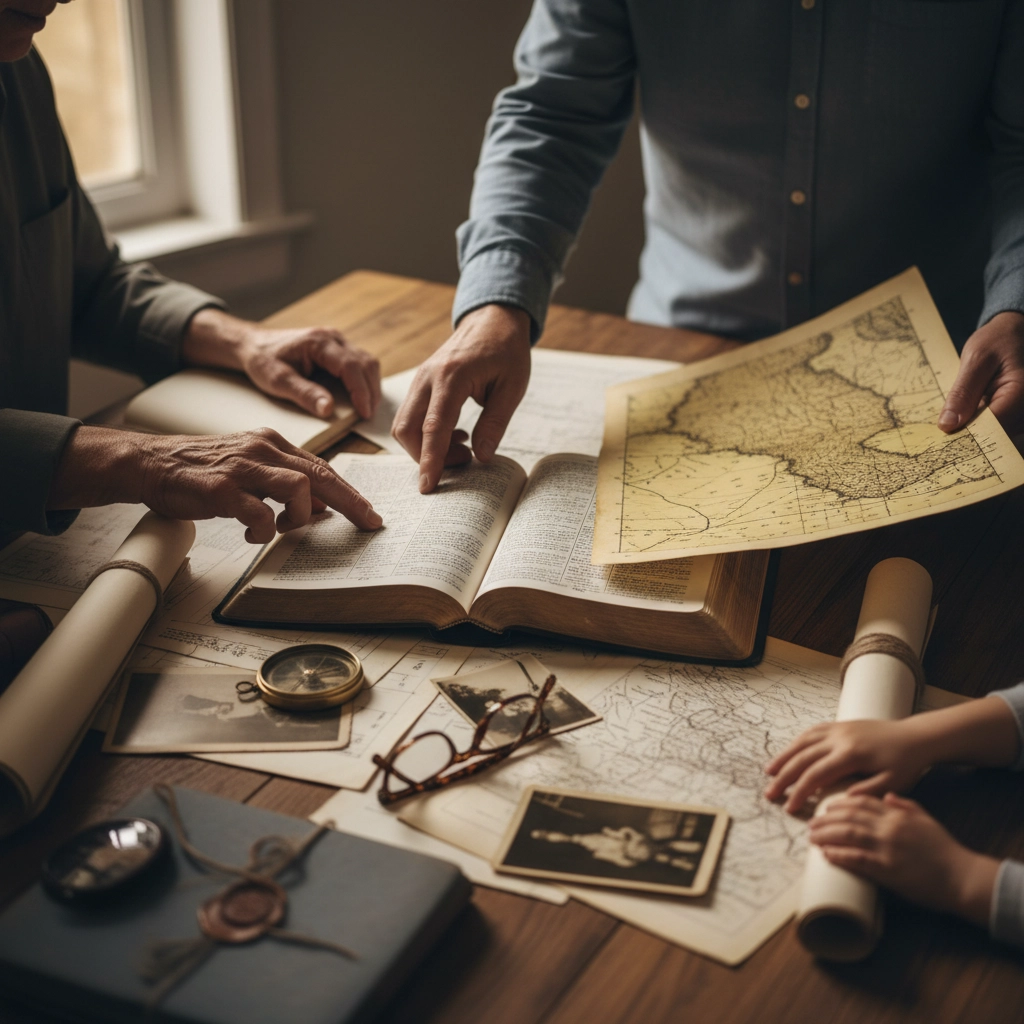
Success with Scotland's new online records begins with solid preparation. Gather everything you already know about your Scottish connections, including family stories, immigration records, and DNA matches. These details guide your digital searches and help verify potential matches.

Develop familiarity with Scottish naming patterns, geography, and historical context. Scottish families traditionally used patronymic naming systems, where children received names from grandparents in specific patterns. Understanding these conventions helps identify family relationships even when explicit genealogical records are missing.

Consider the historical forces that shaped your ancestors' lives. Highland Clearances, religious persecution, economic opportunities, and family networks all influenced Scottish emigration patterns. This context helps explain why your ancestors left Scotland and where they might appear in records.

The Future of Scottish Genealogy Research

The digitisation of Scottish records continues accelerating, with new collections appearing regularly throughout 2025. Stay connected with genealogy communities and professional organisations to learn about newly available resources as they become accessible.

Artificial intelligence and machine learning increasingly enhance record transcription and indexing accuracy. While human verification remains essential, these technological advances make Scottish records more searchable and accessible than ever before.

Collaborative genealogy continues expanding, with DNA testing and online family trees creating new opportunities for connecting with distant cousins and sharing research. Scottish genealogy has always been a community endeavour, and modern technology amplifies these traditional collaborative approaches.

The landscape of Scottish genealogy research has never been more promising. With comprehensive digital collections, powerful search tools, and active research communities, 2025 represents an unprecedented opportunity for discovering your Scottish heritage. Whether you're just beginning your journey or seeking to break through long-standing brick walls, Scotland's new online records provide the resources you need to succeed.

Remember, uncovering your Scottish family history is a journey, not a sprint. Every record and every story brings you closer to understanding the remarkable people who shaped your heritage. These digital tools simply make that journey more accessible, efficient, and rewarding than ever before.

By Brian Nash, Chief Genealogist and Owner, How We Got Here Genealogy Services

Stop Digging Through Dusty Archives: 10 Digital Tools That Will Transform Your Family History Research in 2025

Gone are the days when family historians had to spend countless hours hunched over dusty ledgers in dimly lit archives, squinting at faded handwriting through magnifying glasses. The digital revolution has transformed genealogy research from a laborious treasure hunt into an exciting adventure you can embark upon from the comfort of your own home. Whether you're just starting your family history journey or you're a seasoned researcher hitting brick walls, these 10 cutting-edge digital tools will revolutionise how you uncover your ancestors' stories in 2025.

The beauty of modern genealogy lies not just in convenience, but in the sheer volume of information now at your fingertips. We're talking about billions, yes, billions: of historical records, DNA connections spanning continents, and artificial intelligence that can decipher documents that would have stumped researchers just a decade ago. Let's dive into the tools that are reshaping family history research forever.

The DNA Revolution: Testing Platforms That Connect You to Your Past

1. AncestryDNA: Your Gateway to 27 Billion Records

AncestryDNA stands as the giant in the genealogy world, and for good reason. With over 27 billion historical records and a DNA database containing more than 16 million samples, it's like having the world's largest family reunion at your disposal. The platform's smart matching technology doesn't just show you potential relatives: it connects you to historical records that might otherwise remain hidden in the vast digital archives.

What sets AncestryDNA apart is its intuitive hint system. Imagine having a research assistant who never sleeps, constantly scanning through records to find connections to your family tree. The platform will nudge you when it discovers a birth certificate that matches your great-grandmother's details or a passenger manifest that shows your ancestors' journey to North America. You can start building your family tree for free with a 14-day trial, making it an accessible entry point for curious beginners.

image_1

2. MyHeritage: Bringing Your Ancestors to Life

While many platforms focus solely on names and dates, MyHeritage understands that family history is about preserving memories and stories. With 19.4 billion historical records, it rivals the major players, but its true magic lies in multimedia preservation. You can create rich family narratives by adding photo albums, music, and videos to your family tree.

The platform's "Deep Nostalgia" feature represents a fascinating glimpse into the future of genealogy. Using artificial intelligence, it can animate faces in old photographs, creating short videos that make your Victorian-era ancestors appear to move and look around. Whilst it might seem like novelty, this technology helps create emotional connections to people who lived decades or centuries before you were born.

3. FamilyTreeDNA: The Specialist's Choice

For those seeking detailed genetic genealogy, FamilyTreeDNA offers comprehensive testing that goes beyond basic ethnicity estimates. This platform specialises in building detailed family trees that span multiple generations, with tools specifically designed for serious genealogists who want to understand complex family relationships.

The real power of FamilyTreeDNA lies in its advanced DNA analysis tools. You can track both maternal and paternal lines with precision, making it invaluable for adoptees searching for biological families or researchers trying to break through particularly stubborn brick walls. The platform's focus on genetic genealogy makes it an essential tool for anyone serious about using DNA evidence in their research.

International Specialists: Platforms for Specific Regions

4. Findmypast: Your British and Irish Connection

If your ancestors hail from the British Isles, Findmypast is your secret weapon. This platform has invested heavily in digitising British and Irish records, from parish registers to military service documents. It's particularly strong for English, Scottish, Welsh, and Irish research, with collections that often aren't available elsewhere.

The platform's ancestry kit provides detailed ethnicity percentages and allows you to trace both maternal and paternal lines across the globe. What makes Findmypast special is its focus on context: records come with historical background that helps you understand what life was like for your ancestors during their time period.

5. LivingDNA: Comprehensive Genomic Analysis

LivingDNA takes a different approach by testing your entire genome for the most complete and accurate results available. Rather than focusing on just selected portions of your DNA, this comprehensive analysis provides incredibly detailed information about your ethnic ancestry.

Results typically arrive within 10-12 weeks, but the wait is worthwhile. LivingDNA's reports include sub-regional breakdowns that can pinpoint your ancestry to specific counties within countries. For those with complex mixed heritage, this level of detail can be revelatory, showing migration patterns and ancestral movements with remarkable precision.

The Free Powerhouse: FamilySearch

6. FamilySearch: The World's Largest Free Genealogy Resource

FamilySearch deserves special recognition as the most comprehensive free genealogy platform available. Operated by The Church of Jesus Christ of Latter-day Saints, it provides access to massive collections of records from around the world without requiring a subscription. This makes it invaluable for researchers on limited budgets or those just beginning their genealogy journey.

image_2

What makes FamilySearch truly revolutionary is its collaborative approach. Multiple researchers can work together on shared family trees, combining their knowledge and sources to create more accurate and complete family histories. The platform has also implemented AI-based transcription tools that make previously unsearchable handwritten documents accessible through full-text search capabilities.

The volunteer indexing program means new records are constantly being added and made searchable. When you can't decipher that 18th-century parish register, chances are someone has already transcribed it and made it searchable on FamilySearch.

Desktop Power: Software Solutions

7. RootsMagic: Professional-Grade Family Tree Software

For researchers who prefer maintaining control over their data rather than relying on cloud-based platforms, RootsMagic offers a powerful desktop solution. Unlike subscription-based services, this software requires only a one-time purchase, making it economical for long-term users.

RootsMagic works on both Windows and Mac systems, providing robust organisational features for managing complex genealogy databases. You can create detailed reports, manage media files, and maintain meticulous source citations: all crucial elements for serious family historians. The software's strength lies in its flexibility and the fact that your data remains under your complete control.

Organisation and Management: Research Tools

8. Zotero: Your Personal Research Assistant

One of the biggest challenges in genealogy research isn't finding information: it's keeping track of what you've found. Zotero solves this problem by functioning as a comprehensive reference management system specifically valuable for genealogical research.

This free, open-source tool helps you collect, organise, annotate, cite, and share your family history research. Whether you're cataloguing website sources, managing individual record citations, or keeping track of research strategies, Zotero keeps everything systematically organised. Many professional genealogists consider it indispensable for maintaining research integrity and avoiding the frustration of relocating valuable sources.

image_3

The AI Revolution: Artificial Intelligence Tools

9. ChatGPT and AI Research Assistants

The integration of artificial intelligence into genealogy research represents perhaps the most exciting development in recent years. ChatGPT and similar AI tools like Claude and Google Gemini have become invaluable research assistants, offering capabilities that seemed impossible just a few years ago.

ChatGPT excels at creating organised, step-by-step research plans with actionable directions. You can ask it to suggest specific census years to investigate, recommend National Archives record groups, or help interpret complex historical documents. Google Gemini is particularly effective at identifying key genealogical sources like military records and newspaper archives, often providing helpful reminders about Freedom of Information Act requests for additional data.

These AI tools don't replace traditional research methods: they enhance them. They can help translate foreign language documents, suggest alternative spellings for ancestor names, and provide historical context that helps you understand your ancestors' lives. Think of them as having a knowledgeable research partner available 24 hours a day.

10. Perplexity AI: The Research Query Specialist

Perplexity AI deserves special mention for its ability to handle complex genealogical queries with sourced answers. Unlike general search engines, Perplexity understands research context and can provide specific, actionable advice for genealogical challenges.

You can ask Perplexity questions like "What records are available for tracking Irish immigrants to Nova Scotia in the 1840s?" and receive detailed, sourced responses with specific repositories and record types. It's particularly valuable for understanding historical context and identifying research strategies for specific time periods and locations.

Bringing It All Together: Your Digital Research Arsenal

The true power of these tools lies not in using them individually, but in combining them strategically. Start with DNA testing on platforms like AncestryDNA or MyHeritage to identify potential relatives and ethnicity estimates. Use FamilySearch's free resources to build your basic family tree and locate initial records. Employ specialised platforms like Findmypast for region-specific research.

image_4

Organise your findings with Zotero, manage complex data relationships with RootsMagic, and leverage AI tools to overcome research challenges and develop new strategies. This comprehensive digital toolkit transforms genealogy from a time-consuming hobby into an efficient, systematic pursuit that can yield remarkable results.

The revolution in digital genealogy tools means that more family mysteries can be solved, more connections can be made, and more stories can be preserved than ever before. Whether you're researching Acadian roots in the Maritimes, tracking Scottish Highland ancestry, or unravelling complex immigration patterns, these tools provide the keys to unlocking your family's past.

Don't let another year pass wondering about your family's story. The archives are no longer dusty, distant, or difficult to access. They're right at your fingertips, waiting to reveal the remarkable journey that led to you. Your ancestors' stories are ready to be discovered: these digital tools are your map to finding them.

Ready to transform your genealogy research? Visit How We Got Here Genealogy Services to learn how professional guidance can help you make the most of these powerful digital tools and finally breakthrough those stubborn brick walls in your family tree.

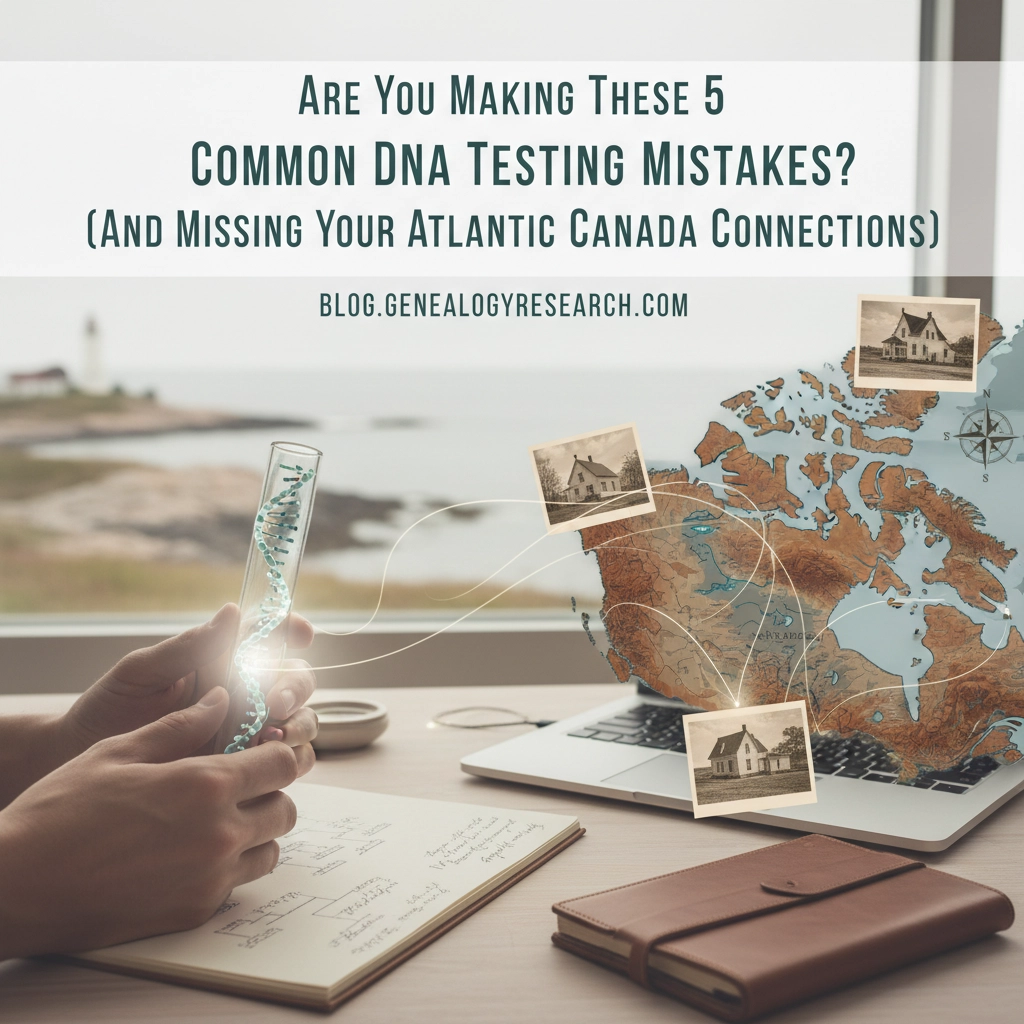
Are You Making These 5 Common DNA Testing Mistakes? (And Missing Your Atlantic Canada Connections)

DNA testing has revolutionised genealogy research, particularly for those of us tracing Atlantic Canada roots. Whether you're hunting down Acadian ancestors, following Maritime migration patterns, or trying to connect with distant Nova Scotia cousins, DNA can be your secret weapon. But here's the thing: I see the same costly mistakes over and over again, and they're keeping people from discovering their true Atlantic Canada connections.

After years of helping families piece together their Maritime heritage, I've noticed that the difference between DNA success and DNA frustration often comes down to avoiding these five critical errors. Let's dive in and make sure you're not sabotaging your own family history journey.

Mistake #1: Contaminating Your DNA Sample (And Why This Matters More in Atlantic Canada Research)

Picture this: you've finally decided to take that DNA test to confirm your suspected Acadian lineage. You're excited, maybe a bit nervous, and you grab your morning coffee whilst reading the instructions. Big mistake.

Sample contamination is the most preventable yet common error in DNA testing. When you consume food, beverages, smoke, or chew gum within 30 minutes of collecting your sample, you're introducing foreign genetic material that can skew your results. This might seem minor, but for Atlantic Canada research, where precise ethnic percentages can distinguish between French Acadian, Scottish Highland, or Irish heritage, contamination can muddy the waters significantly.

image_1

The Atlantic Canada Connection: Maritime families often have complex mixed heritage: Acadian French, Mi'kmaq First Nations, Scottish, Irish, and English. Contaminated samples can blur these distinct genetic signatures, making it harder to identify which cultural communities your ancestors belonged to.

The Fix: Fast for at least 30 minutes before collection. No exceptions. Rinse your mouth with water, wait, then collect your sample exactly as instructed. If you're testing multiple family members (brilliant strategy, by the way), handle one kit at a time in separate areas to prevent cross-contamination.

Mistake #2: Playing Fast and Loose with Sample Handling

Here's where things get properly frustrating. You've followed the contamination rules perfectly, but then you accidentally mix up sample tubes between family members. This happens more often than you'd think, especially when enthusiastic families decide to test everyone at Christmas dinner.

Data entry errors and sample mislabelling represent the most frequent mistakes during DNA collection. I've seen cases where a father's DNA results came back under his daughter's name, completely confusing the family tree and leading to months of unnecessary confusion.

The Atlantic Canada Connection: Maritime families are often close-knit, with multiple generations living nearby. This makes group testing sessions tempting, but also increases the risk of mix-ups. When you're trying to distinguish between branches of large Acadian families or trace which MacLeod cousin connects to which Highland settlement, accuracy becomes absolutely crucial.

The Fix: Open one kit at a time. Complete the entire process: registration, collection, sealing, posting: before touching the next kit. Use different rooms if possible. Create a simple checklist: "Name matches tube, tube matches envelope, envelope matches shipping label."

Mistake #3: Going Solo When You Should Be Building a Team

This is where I see people really limit their potential discoveries. They test themselves and wait for magic to happen. But DNA genealogy isn't a solo sport: it's a team effort.

Not testing known relatives or failing to upload their existing DNA results is like trying to solve a jigsaw puzzle with only half the pieces. Every additional family member you include dramatically improves your ability to identify shared ancestors and understand your Atlantic Canada connections.

image_2

The Atlantic Canada Connection: Maritime communities were often small and interconnected. Your third cousin in Yarmouth might hold the key to identifying your Lunenburg German ancestors, whilst your aunt's DNA could reveal the missing link to your Cape Breton Scottish roots. These connections often span the entire Atlantic region.

The Fix: Start a family DNA project. Approach parents, aunts, uncles, and willing cousins about testing. If they've already tested elsewhere, many platforms accept uploads from other companies. Even one additional known relative can transform your results from confusing to conclusive.

Mistake #4: Putting All Your Eggs in One Basket

Different DNA testing companies maintain entirely different databases. Your Prince Edward Island cousins might only show up on AncestryDNA, whilst your Newfoundland connections could be concentrated on 23andMe or MyHeritage. Relying on a single platform is like fishing in only one section of the harbour when the best catches are spread across multiple areas.

The Atlantic Canada Connection: Atlantic Canada has a unique demographic history. Early Acadian settlers, Scottish Highland clearances, Irish famine refugees, and Maritime migration to New England created scattered family networks. These diverse communities may have gravitated toward different DNA testing platforms, meaning your matches could be fragmented across multiple databases.

image_3

The Fix: Upload your raw DNA results to multiple genealogy platforms. MyHeritage, FamilyTreeDNA, and GEDmatch all accept uploads from major testing companies, often for free or a small fee. This dramatically expands your potential match pool without requiring additional testing.

Mistake #5: Flying Blind with Analysis Tools

You've got your results back, you're looking at hundreds of DNA matches, and you're completely overwhelmed. You start clicking through chromosome browsers without understanding what you're looking for, or you assume that larger shared DNA segments automatically mean closer relationships.

Misusing analysis tools and misinterpreting results is perhaps the most frustrating mistake because you have all the data you need: you're just not using it effectively. This is like having a detailed map but not knowing how to read the compass.

The Atlantic Canada Connection: Atlantic Canada genealogy often involves complex relationship networks. Endogamous communities (where people married within small geographic or cultural groups) can make DNA analysis particularly challenging. Acadian families, isolated island communities, and tight-knit Scottish settlements all created genetic patterns that require careful interpretation.

The Fix: Take time to learn the basics of DNA analysis. Understand what centiMorgans mean, learn to use chromosome browsers effectively, and don't rely solely on automated ethnicity estimates. Consider taking an online DNA course or joining Atlantic Canada genealogy Facebook groups where experienced researchers share knowledge.

image_4

Maximising Your Atlantic Canada DNA Success

Beyond avoiding these mistakes, here are some specific strategies for Atlantic Canada research:

Test the Eldest Generation First: Your grandmother's DNA contains genetic information that might be diluted or lost in younger generations. Atlantic Canada families often have excellent oral histories: combine DNA with family stories for maximum impact.

Understand Migration Patterns: Atlantic Canada families rarely stayed put. They moved from Acadia to Louisiana, from Nova Scotia to New England, from Newfoundland to Ontario. Your closest DNA matches might be thousands of kilometres away from your ancestors' original settlements.

Embrace the Complexity: Atlantic Canada heritage is beautifully complex. Don't be discouraged if your results show unexpected ethnicities or confusing family connections. This diversity is part of your story.

image_5

The Laboratory Quality Factor

Not all DNA testing labs maintain identical standards. Ensure your chosen company uses accredited facilities with proper protocols and regularly calibrated equipment. Whilst DNA testing is 99.999% accurate at quality labs, substandard facilities can produce errors that completely derail your research.

For Atlantic Canada research specifically, choose companies with strong databases in North America and Europe, since these regions contain most Maritime DNA matches.

Moving Forward with Confidence

Remember, uncovering your Atlantic Canada family history is a journey, not a sprint. These DNA mistakes are completely avoidable with proper planning and realistic expectations. Every corrected error brings you closer to understanding your Maritime heritage and connecting with cousins you never knew existed.

The Atlantic Canada story is one of resilience, migration, and interconnected communities spanning centuries. Your DNA holds pieces of this remarkable narrative: don't let simple mistakes prevent you from discovering the full story.

Whether you're just beginning your DNA journey or looking to solve existing mysteries, avoiding these five common mistakes will dramatically improve your chances of success. Your Atlantic Canada ancestors are waiting to be found: make sure you're giving yourself the best possible chance to find them.

Ready to dive deeper into your Atlantic Canada DNA research? Every family story matters, and every connection brings us closer to understanding the rich tapestry of Maritime heritage that makes this region so special.

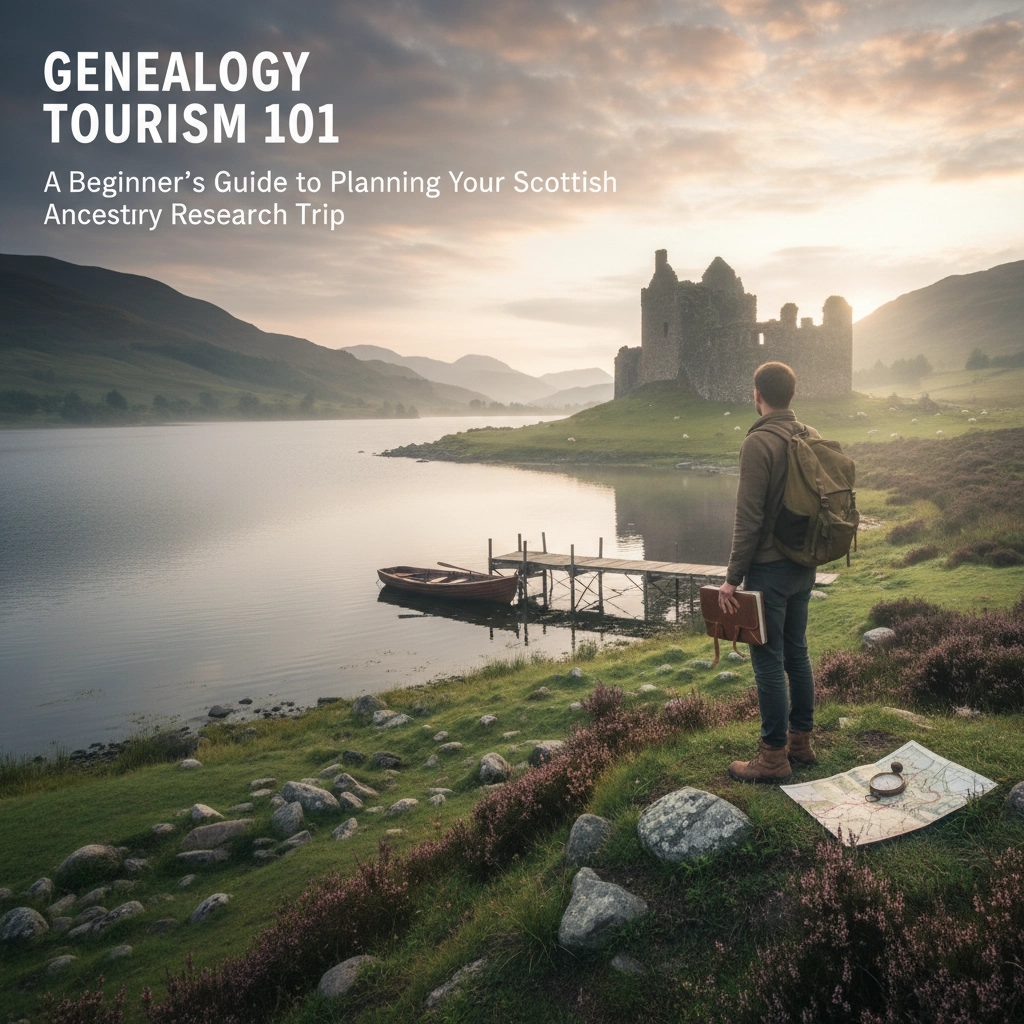
Genealogy Tourism 101: A Beginner's Guide to Planning Your Scottish Ancestry Research Trip

Picture this: you're standing in a centuries-old Scottish church, holding a baptismal record with your great-great-grandfather's name written in faded ink, whilst Highland mist swirls around ancient gravestones bearing your family surname. This isn't just a daydream: it's the magic of genealogy tourism, and Scotland offers one of the world's most rewarding experiences for tracing your family roots.

Whether you're a MacDonald searching for clan connections or a Smith trying to pin down that elusive Highland ancestor, combining family history research with travel transforms abstract names and dates into a living, breathing story. But here's the thing: wandering around Scotland hoping to stumble upon your family history is like searching for a needle in a haystack blindfolded. Success requires preparation, strategy, and knowing where to look.

Why Scotland is Your Genealogy Goldmine

Scotland holds a massive advantage over other parts of the UK when it comes to genealogical research. Unlike England, where you're often limited to indexes, Scotland gives you direct access to original statutory records and scanned parish books spanning nearly 500 years. We're talking about birth, marriage, and death certificates, census records, Old Parochial Parish Registers, Catholic Church records, and wills: roughly 90 million records that are continuously updated.

Here's what makes Scottish records particularly brilliant: birth certificates include both parents' information, making it significantly easier to link generations together. It's like having a genealogical GPS system guiding you from one generation to the next.

image_1

Laying Your Groundwork: Pre-Trip Preparation

Before you book that flight to Edinburgh, become your own family detective. Gather every scrap of information you can find: approximate dates, places, ages, and any family stories (even the ones your relatives insist are "probably just legends"). These details become your roadmap once you're navigating Scottish archives.

If you're already using genealogy software, export your family tree in GEDCOM or PAF format. Professional tour guides can use this information to craft a strategic itinerary that maximises your research time. Don't underestimate the power of starting your research online before travelling: many resources are accessible remotely, helping you narrow your focus and identify specific gaps in your family story.

Create a research plan with realistic goals. Rather than hoping to trace every branch back to Robert the Bruce, focus on one or two specific ancestral lines. This targeted approach prevents you from feeling overwhelmed and actually increases your chances of meaningful discoveries.

The Heart of Scottish Genealogy: Understanding Your Resources

The ScotlandsPeople Centre in Edinburgh serves as your command centre for Scottish genealogy research. Think of it as the Louvre of family history: housing an incredible collection with expert guides to help you navigate it all. Here's your secret weapon: whilst many recent records online are restricted to protect living individuals, visiting in person gives you unrestricted access to view and print documents directly from computer screens.

The centre's collection includes records that tell your ancestors' complete life stories. Census returns reveal who lived in their households, their occupations, and even their relationships to each other. Parish registers document baptisms, marriages, and burials, often including details about parents, witnesses, and family connections that aren't found anywhere else.

image_2

Crafting Your Scottish Adventure: Duration and Style Options

Scottish ancestry tours range from focused single-day research sessions to comprehensive multi-week expeditions that combine archival work with visits to ancestral homelands. The sweet spot for most genealogy tourists? Around 10 days, which allows sufficient time for both serious research and meaningful exploration of your family's geographical roots.

Tour operators like Zicasso, Black Kilt Tours, and Kilted Piper Tours specialise in customised itineraries tailored to your specific family history. Expect to invest around £3,700 per person for a comprehensive 10-day ancestry tour (excluding international flights), with costs varying based on accommodation choices, included activities, and meal selections.

But here's the thing: you don't need to book an organised tour to have a successful genealogy trip. Many independent travellers combine a few days of guided research with self-directed exploration, creating a personalised adventure that fits their budget and interests.

Your Scottish Genealogy Journey: What to Expect

Most ancestry research trips follow a proven formula that balances serious archival work with cultural immersion. Your Edinburgh arrival typically begins with orientation to major heritage sites: Edinburgh Castle housing the Scottish Crown Jewels, and a comprehensive session at the Scottish Genealogy Society where you'll learn to trace your family name back to specific clans.

The centrepiece of your trip will be that dedicated day at the ScotlandsPeople Centre, where professional genealogists guide you through building your family tree using census returns, certificates, and heritage archives. This isn't just data collection: it's detective work that reveals the human stories behind the names and dates.

image_3

Following your research foundation, you'll venture into the Scottish landscape to visit places where your ancestors actually lived, worked, and worshipped. These journeys often include historic battlefields like Culloden, where clan markers commemorate families who fought and lost members during 18th-century conflicts. You might explore ancient clan castles, wander through centuries-old churchyards searching for family gravestones, or visit villages where your great-grandparents were born.

Island destinations frequently feature in ancestry tours, each offering unique connections to Scottish heritage. The Isle of Skye provides Macleod clan connections with visits to Dunvegan Castle and its legendary Fairy Flag. The Isle of Lewis and Harris houses the Seallam Visitor Centre and the ancient Callanish Standing Stones: a 5,000-year-old site that connects your ancestral culture to the dramatic Scottish landscape.

Maximising Your Genealogy Tourism Success

Book your ScotlandsPeople Centre visit well in advance, especially during peak tourist seasons when fellow genealogy enthusiasts flood Edinburgh. The centre experiences high visitor traffic, and reservation ensures you won't waste precious research time waiting for availability.

Consider hiring a professional genealogist for complex research challenges. These specialists possess advanced skills and local knowledge that can save you considerable time whilst uncovering records you might otherwise miss. Think of them as your genealogy sherpas, guiding you efficiently through Scotland's vast archival landscape.

Beyond pure genealogy work, incorporate cultural experiences that provide context for understanding your ancestors' daily lives. Highland Folk Museums offer immersive exhibits and storytelling that bring historical periods to life. Local pubs become informal research centres where you might connect with distant relatives or locals possessing knowledge about your ancestral families.

image_4

Beyond the Records: Creating Meaningful Connections

The real magic of genealogy tourism happens when you move beyond names and dates to understand how your ancestors lived. Visit the landscapes they knew, walk the streets they travelled, and experience the culture that shaped their worldview. Standing in a 12th-century church where generations of your family worshipped creates connections that no online database can replicate.

Document your journey thoroughly: not just the genealogical discoveries, but the emotional moments, the unexpected connections, and the stories locals share with you. These experiences often become as valuable as the official records you'll discover.

Don't forget practical considerations: bring portable phone chargers for photographing documents, pack comfortable walking shoes for cemetery explorations, and consider travel insurance that covers genealogy research activities.

Your Family Story Awaits

Planning a Scottish ancestry research trip might seem daunting initially, but remember: every successful genealogy tourist started exactly where you are now, with questions about their family history and a desire to understand their heritage more deeply. Scotland's incredible record-keeping tradition, combined with its stunning landscapes and welcoming culture, creates ideal conditions for transforming genealogical research from a solitary pursuit into an adventure of discovery.

Whether you're tracing Highland clan connections or following Lowland agricultural ancestors, Scotland offers resources and experiences that will enrich your understanding of your family story. The key lies in thorough preparation, realistic expectations, and openness to unexpected discoveries along the way.

Your ancestors' stories are waiting in Scottish archives, churchyards, and landscapes. All you need to do is take that first step towards uncovering them. After all, every family has a story: and yours is calling from the Scottish Highlands.

Ready to start planning your Scottish genealogy adventure? Contact How We Got Here Genealogy Services for personalised guidance on preparing for your ancestral research journey.

Scottish Records Under Lock and Key? 7 Alternative Ways to Trace Your Highland Ancestry Right Now

Ever felt like you're wandering through a genealogical maze blindfolded when it comes to tracing your Scottish ancestors? You're not alone. With the National Records of Scotland (NRS) requiring weeks of advance booking and limiting document access per visit, many family historians find themselves hitting brick walls faster than a Highland charge at Culloden.

But here's the thing – those locked doors in Edinburgh aren't the only path to your Scottish heritage. Whether you're descended from Highland crofters, Lowland farmers, or urban merchants, there are powerful alternatives that can unlock your family's story without waiting months for archive access.

Let me share seven proven strategies that are transforming how genealogists trace Scottish ancestry, methods that professional researchers use daily to bypass traditional roadblocks.

1. Harness the Power of DNA Testing for Geographic Precision

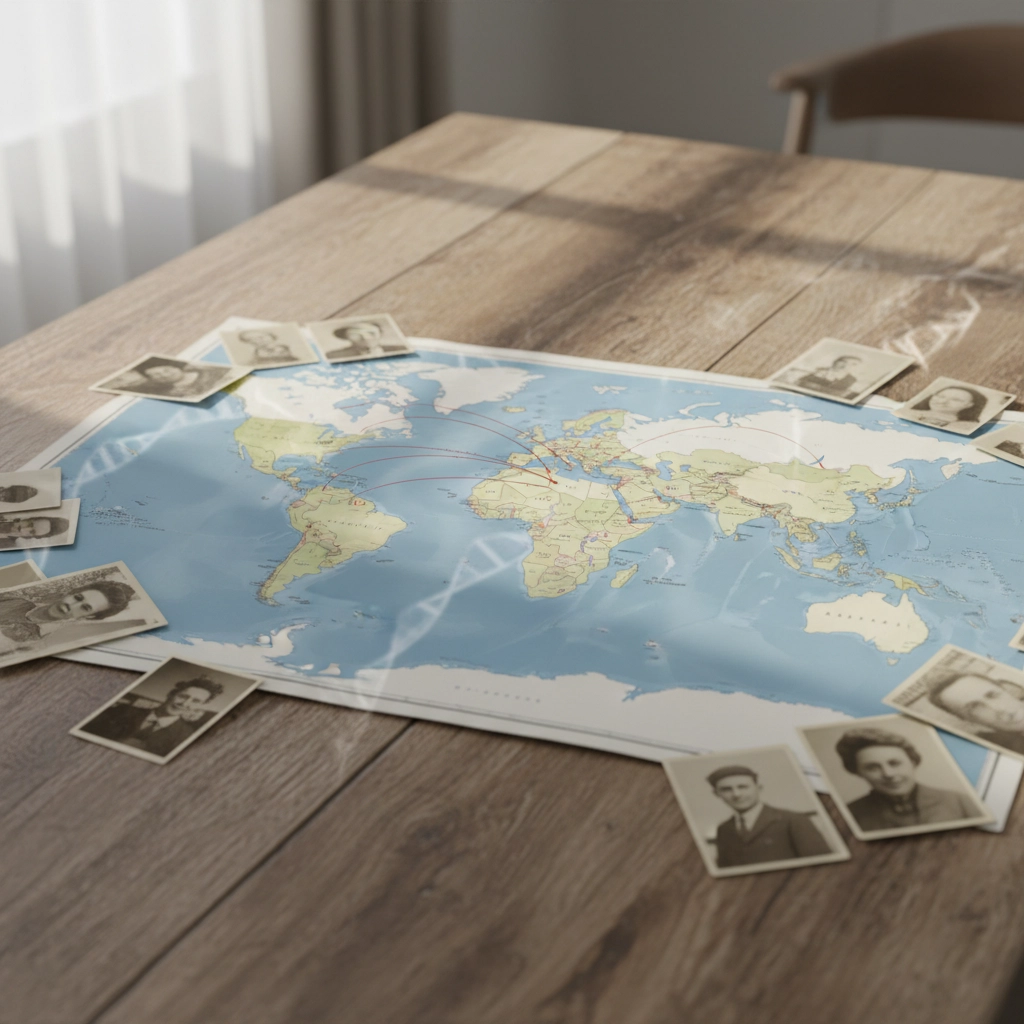
Think of DNA testing as your genetic compass pointing directly to your ancestral homeland. Services like AncestryDNA, 23andMe, and MyHeritage provide far more than colourful pie charts – they're revealing precise geographic origins within Scotland and connecting you with living relatives who share your family line.

image_1

Here's what makes DNA particularly powerful for Scottish research: the genetic signatures of Highland clans, Lowland families, and island communities remain distinct enough to pinpoint your ancestors' likely regions. Even better, many Scottish descendants emigrated to Canada, the United States, Australia, and New Zealand during the Highland Clearances and other historical upheavals, creating a global network of genetic cousins.

Your DNA matches often possess family documents, photographs, and oral histories that complement your research. I've seen clients discover entire branches of their family tree through one well-placed DNA connection – relatives who preserved clan histories, emigration documents, and family Bibles that survived when official records didn't.

Pro tip: Upload your DNA results to multiple platforms. GEDmatch and FamilyTreeDNA's database might contain Scottish matches that aren't on your original testing site.

2. Master Online Genealogy Databases Beyond the Obvious

While everyone knows about Ancestry and FamilySearch, Scottish genealogy requires a more strategic approach to online resources. ScotlandsPeople, operated by the National Records of Scotland, offers the most comprehensive collection of Scottish vital records, but it's just the beginning.

The secret weapon many genealogists overlook? Findmypast's exceptional Scottish collections. Their transcribed parish registers, statutory records, and census data often contain details missing from other platforms. MyHeritage's SuperSearch technology excels at finding variant spellings of Scottish surnames – crucial when dealing with names like MacLeod (recorded as McCloud, McCleod, or even Cloud).

Don't sleep on FamilySearch's Scottish collections either. Their digitised parish registers and microfilm collections include records not available elsewhere, particularly for smaller Highland parishes. The Mormon church's methodical digitisation efforts have preserved thousands of Scottish records that might otherwise be inaccessible.

Research strategy: Start with free indexes on these platforms before committing to paid subscriptions. Create a spreadsheet tracking which databases you've searched for each ancestor – it's easy to lose track when juggling multiple platforms.

3. Unlock Alternative Church Records

Here's where Scottish genealogy gets interesting. Not every Scottish ancestor appears in Church of Scotland (Kirk) registers. Presbyterian denominations, Free Church congregations, Catholics, Episcopalians, and other religious groups maintained separate, detailed records that often contain information omitted from official parish registers.

image_2

These alternative church records frequently document illegitimate births, poor relief payments, disciplinary proceedings, and community relationships that provide rich context about your ancestors' lives. Many denominations kept meticulous records of members' backgrounds, including their previous parishes and family connections.

Finding these records requires detective work:

  • Research which denominations were active in your ancestor's parish
  • Contact local historical societies and museums
  • Check university archives (many hold religious denomination records)
  • Explore the National Library of Scotland's manuscript collections

Direct outreach works wonders: Write to local congregations with a generous donation offer in exchange for record searches. Most church officials are delighted to help when approached respectfully.

4. Mine Graveyards and Monumental Inscriptions

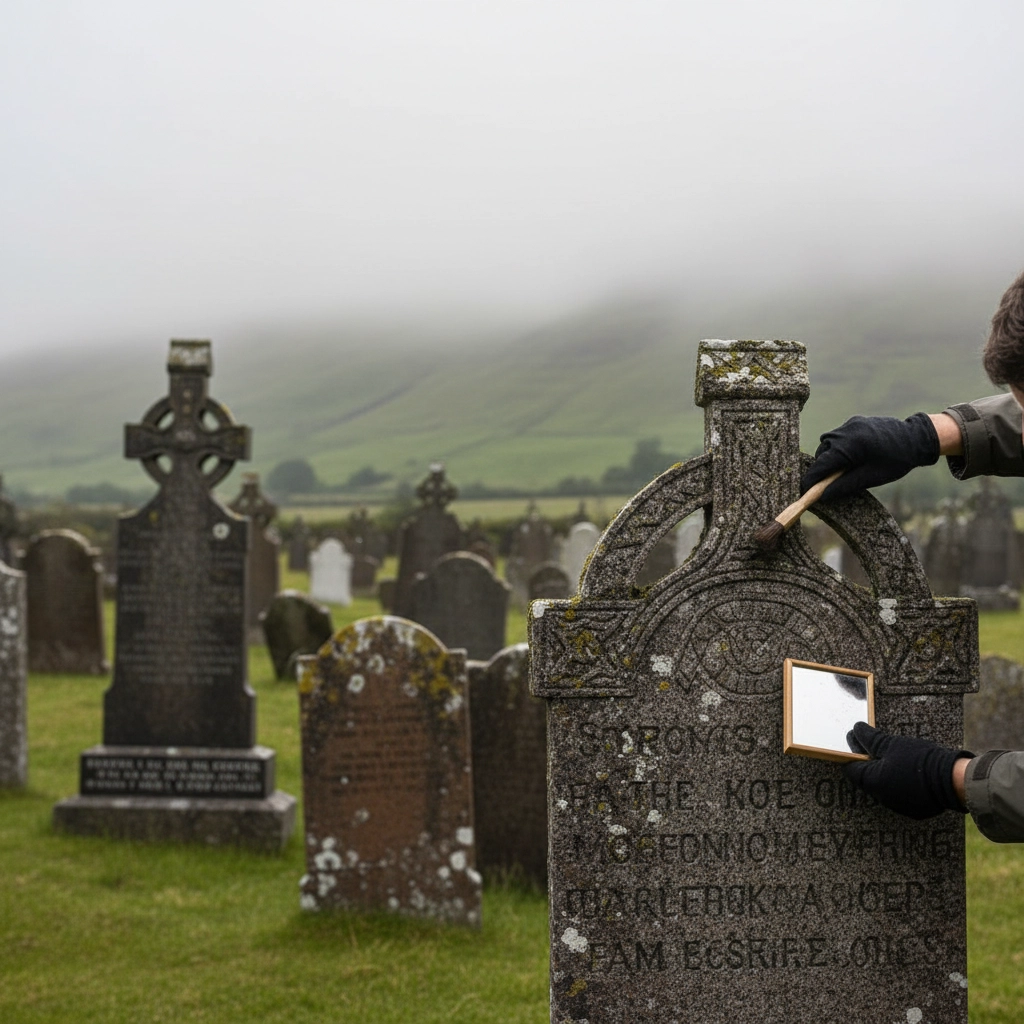
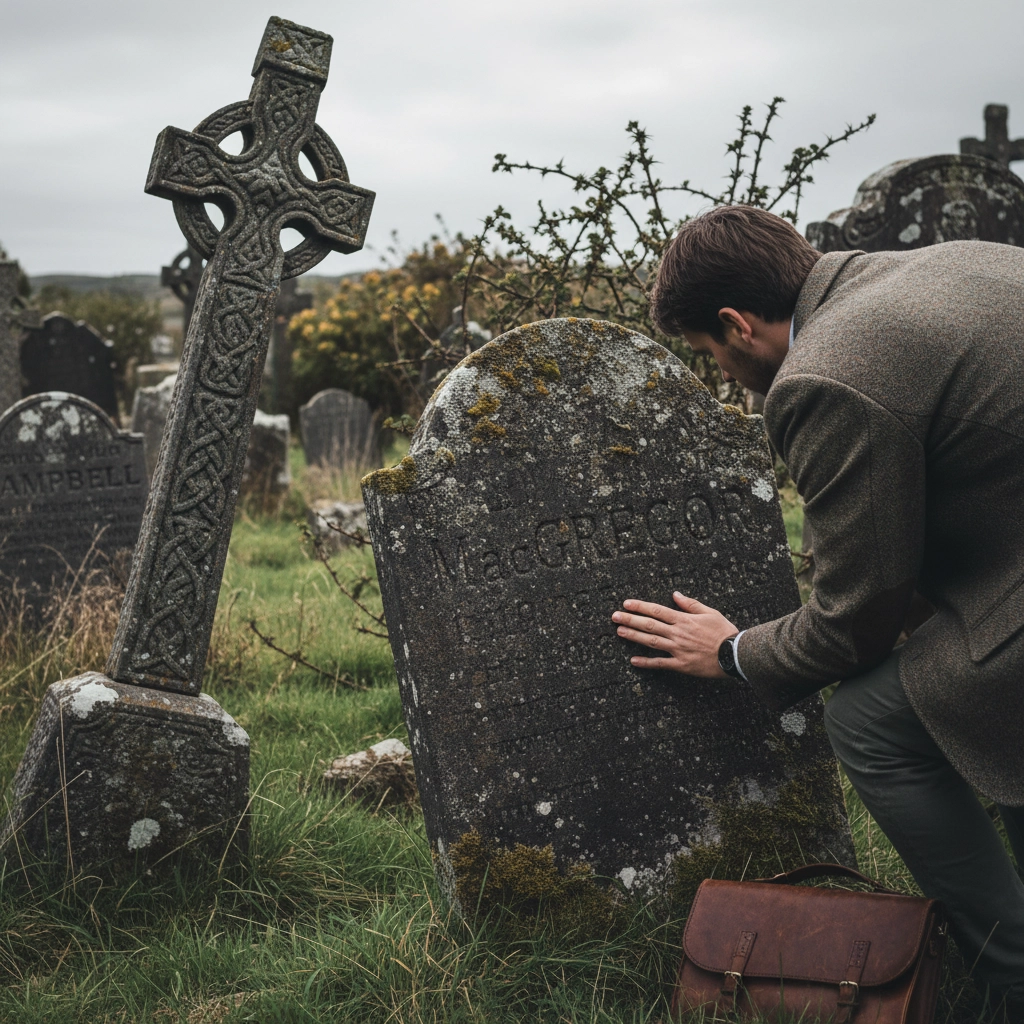
Cemetery records and monumental inscriptions (MIs) often reveal family relationships that don't appear in official records. Scottish graveyards are treasure troves of genealogical information – dates, family connections, occupations, and sometimes entire family trees carved in stone.

The beauty of cemetery research? These records survived wars, fires, and administrative reorganisations that destroyed paper documents. Many Scottish parishes have published MI collections, and volunteers continue transcribing cemetery records worldwide.

Modern cemetery research tools:

  • Find A Grave and BillionGraves for photographed headstones
  • Local family history society publications
  • Parish-specific MI collections in genealogy libraries
  • Google Earth for locating remote Highland cemeteries

Field research tip: When visiting Scotland, spend time in parish churchyards. Even weathered stones can yield readable inscriptions with proper lighting and techniques.

5. Explore Civil Registration and Neglected Entries

Scotland's civil registration system includes a hidden gem: Neglected Entries – records that weren't initially registered in Church of Scotland parish registers. These documents, covering approximately 130 parishes, are available through ScotlandsPeople and often contain the missing piece of your genealogical puzzle.

image_3

Civil registration began in Scotland in 1855, but the Neglected Entries extend back much further, sometimes to the 1700s. These records capture births, marriages, and deaths that slipped through the cracks of standard parish registration.

Additional civil registration resources:

  • Deceasedonline.com for burial records and cemetery indexes
  • Scottish Deaths records (1855-present) for comprehensive death documentation
  • Sheriff Court records for marriage contracts and family disputes
  • Commissary Court records for wills and testaments

Don't overlook delayed registrations – births and marriages sometimes registered years after the fact when emigrants needed documentation for travel or legal purposes.

6. Investigate Land and Property Records

Scottish land records offer a window into your ancestors' economic circumstances and family relationships that vital records can't provide. Sasines (property transaction records) and the Register of Deeds sometimes include marriage contracts, family settlements, and detailed genealogical information spanning generations.

These records reveal property ownership patterns, debt relationships, and family financial arrangements. A sasine might show your ancestor inheriting land from an uncle, revealing previously unknown family connections. Marriage contracts often list parents, witnesses, and extended family members.

Key Scottish property records:

  • Register of Sasines (1617-1976) for land transfers
  • Register of Deeds for contracts and agreements
  • Valuation Rolls for property ownership and values
  • Estate papers in private collections and archives
  • Sheriff Court records for property disputes

Research tip: Property records use legal terminology and Latin phrases. Create a glossary of common terms to speed your research.

7. Engage Local Archives and Professional Record Agents

When Edinburgh's archives aren't accessible, Scotland's network of local archives, family history centres, and professional record agents becomes invaluable. These local experts possess intimate knowledge of regional records, family histories, and archival collections that even experienced genealogists might miss.

Local archives offer unique advantages:

  • Regional family history centres with co-located archives and registration functions
  • Local museum collections with family papers and photographs
  • University special collections with manuscript materials
  • Private collections held by historical societies

Professional record agents specialise in specific Scottish regions and maintain extensive networks within genealogical communities. They navigate complex archival systems efficiently and often uncover family connections through local knowledge and professional relationships.

Working with Scottish record agents:

  • Choose agents specialising in your target region
  • Provide detailed research questions and known information
  • Expect detailed reports with source citations
  • Build ongoing relationships for complex research projects

The Path Forward

Breaking through Scottish genealogical brick walls requires patience, creativity, and strategic thinking. Each alternative method reveals different layers of your family's story – DNA connects you with living relatives, church records provide community context, property documents show economic relationships, and local agents offer regional expertise.

The key is diversifying your approach. Don't rely on a single resource or method. Combine DNA discoveries with online database searches, supplement official records with alternative church documentation, and balance digital research with local expertise.

Remember, every Scottish family has faced challenges – Highland Clearances, religious persecution, economic hardship, emigration. Your ancestors' stories survived because they were resilient, adaptable, and resourceful. Channel that same spirit in your genealogical research.

Your Highland heritage isn't locked away forever. These seven alternative paths can unlock family connections, reveal ancestral stories, and connect you with your Scottish roots – no Edinburgh archive appointment required.

Ready to discover your Scottish ancestry? Visit How We Got Here Genealogy Services to learn how professional genealogical research can accelerate your family history discoveries.

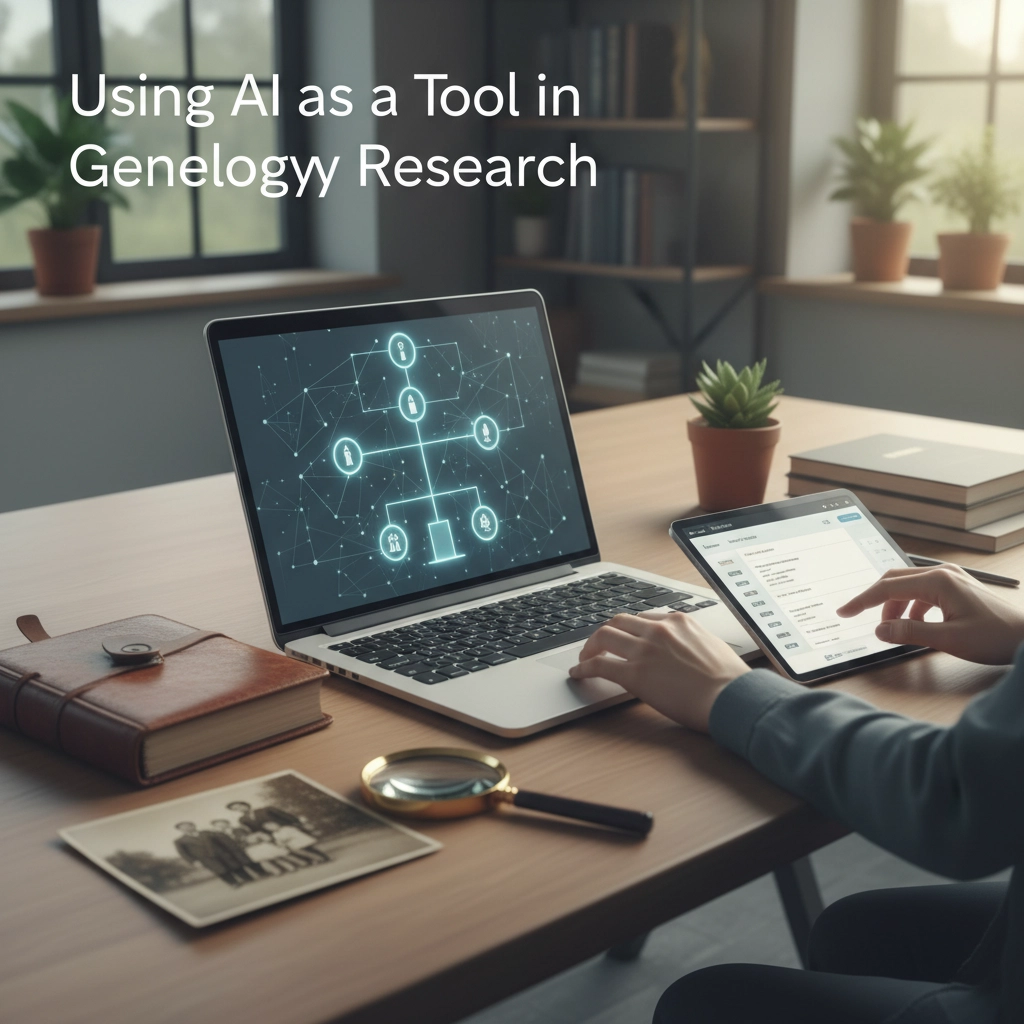
Using AI as a Tool in Genealogy Research

Picture this: you're staring at a handwritten census record from 1851, squinting at what might be your great-great-grandmother's name, but the writing looks like it was done during an earthquake. Sound familiar? Or maybe you've got a stack of documents in French that could hold the key to your Acadian roots, but your high school French is about as useful as a chocolate teapot.

Well, here's some brilliant news – artificial intelligence has stepped into the genealogy world, and it's absolutely revolutionising how we research our family histories. As someone who's been wrestling with stubborn ancestors for years, I can tell you that AI isn't here to replace us genealogists (thank goodness!), but it's become our secret weapon for tackling those research mountains that once seemed impossible to climb.

What AI Actually Does in Genealogy Research

Let's cut through the tech jargon, shall we? At its heart, AI in genealogy works through something called Natural Language Processing (NLP) and machine learning. Think of NLP as a incredibly clever translator that can read, understand, and make sense of human language – even the scratchy handwriting of a Victorian-era parish clerk.

image_1

Machine learning is the real game-changer here. These algorithms analyse massive datasets of family history information, spotting patterns and connections that would take us humans months or even years to identify. It's like having a research assistant with a photographic memory who never needs a coffee break and can cross-reference millions of records in seconds.

The beauty of this technology lies in its ability to predict relationships between individuals and identify those elusive missing links in your family tree. Whether you're trying to connect DNA matches or decipher the relationship between two people mentioned in the same document, AI can analyse the data and suggest the most likely connections based on patterns it's learned from countless other family histories.

The Game-Changing Applications

Transcribing Those Impossible Records

Remember that earthquake-handwriting census record I mentioned? AI handwriting recognition software has become absolutely brilliant at converting these documents into searchable digital text. FamilySearch has been using this technology to index handwritten documents dating back to the 1400s – imagine trying to do that manually!

What used to take teams of volunteers months to transcribe can now be processed in days. Of course, human verification is still essential (we're not quite at the "trust the robots completely" stage yet), but AI gives us a tremendous head start.

Breaking Down Language Barriers

Here's where things get really exciting for those of us with international roots. AI translation tools like Google Translate have become sophisticated enough to tackle historical documents in foreign languages with remarkable accuracy. Whilst you'll still want professional verification for critical details, these tools can quickly tell you whether that German church record or French marriage certificate is worth pursuing.

I've seen genealogists use AI translation to identify relevant documents in minutes rather than hiring expensive translation services upfront. It's particularly valuable when you're dealing with large collections of foreign-language documents and need to prioritise which ones to focus on.

Bringing Photos to Life

The visual side of AI has absolutely captivated the genealogy community. MyHeritage's AI tools can colourise black-and-white photographs, enhance image quality, and even create animated videos of your ancestors. It might sound a bit gimmicky, but there's something genuinely moving about seeing your great-grandmother's photograph come to life, even if it's just a gentle animation.

image_2

AI-powered image recognition can also organise and identify faces in photograph collections, making it easier to track individuals across multiple images. This is particularly helpful when you've inherited boxes of unlabelled family photos – we've all been there!

Supercharged Record Matching

This is where AI truly shines in practical genealogy work. Platforms like Ancestry use sophisticated algorithms to analyse records and suggest potential matches, helping you discover connections you might have missed. These systems can spot similarities in names, dates, and locations across multiple databases, essentially doing the legwork of cross-referencing millions of records.

The AI doesn't just match exact names – it understands variations, common misspellings, and even cultural naming patterns. It might connect "William" in one record with "Bill" in another, or recognise that "O'Brien" and "Brien" likely refer to the same family line.

Tools You Can Start Using Today

Platform-Specific AI Features

Ancestry has integrated AI throughout their platform, from the familiar Ancestry Hints system to more advanced features like handwriting recognition for transcribing documents. Their AI also powers the Newspaper.com Obituary Index, where algorithms identify obituary articles by analysing linguistic patterns rather than requiring manual review of every page.

MyHeritage focuses heavily on photograph analysis and enhancement. Their AI Time Machine feature has become wildly popular, generating animated videos of historical photographs that create genuinely engaging experiences for family members who might not typically show interest in genealogy.

FamilySearch continues advancing their AI capabilities for indexing handwritten documents. Their approach combines AI transcription with volunteer verification – a smart balance that maintains accuracy whilst dramatically speeding up the process.

General AI Tools for Genealogists

Beyond the genealogy-specific platforms, general-purpose AI tools have become invaluable research assistants. ChatGPT, Claude, Gemini, and Perplexity can help you brainstorm research strategies, analyse historical context, organise research notes, and even draft biographical narratives about your ancestors.

image_3

These tools excel at helping you formulate better research questions. Instead of wondering "Where should I look next?", you can ask the AI to suggest specific record types, repositories, or research strategies based on your current findings. They're also brilliant at synthesising information from multiple sources and transforming dry genealogical data into compelling family stories.

The Crucial Caveats (Listen Up, This Is Important!)

Now, before you start trusting AI with your family's entire history, let's have a serious chat about limitations. AI is a phenomenal research accelerator, but it's not a replacement for human judgement, and it certainly isn't infallible.

Always Verify Everything

This cannot be overstated: never accept AI-generated information without independent verification. All translations, record matches, and historical contexts need validation from qualified sources before being incorporated into your family tree. I've seen too many family trees corrupted by unverified AI suggestions that seemed plausible but were completely wrong.

AI Amplifies Existing Biases

AI systems learn from existing data, which means they can perpetuate historical biases present in genealogical records. They might be less accurate with non-European names, struggle with records from underrepresented communities, or make assumptions based on incomplete historical data.

Know Your Role as the Expert

Remember, you're the genealogist here – AI is your research assistant, not your replacement. The technology handles rapid processing and pattern recognition brilliantly, but it cannot replace the interpretive expertise that comes with understanding historical contexts, evaluating source quality, and making nuanced judgements about evidence.

image_4

Making AI Work for Your Research

Start small and build your confidence with AI tools gradually. Begin with simple tasks like translating a single document or using AI to brainstorm research strategies for a brick wall ancestor. As you become more comfortable with what AI can and cannot do, you'll develop a better sense of where it fits into your research workflow.

Keep detailed records of which AI tools you've used and what they've suggested. This documentation helps you track your research process and makes it easier to verify information later. It's also crucial for maintaining the scholarly standards that good genealogy requires.

Most importantly, approach AI as a collaborative partner rather than an authority. Use it to accelerate the mechanical aspects of research whilst maintaining your role as the critical thinker who evaluates evidence and draws conclusions.

The integration of AI into genealogy represents one of the most exciting developments in family history research in decades. These tools are democratising access to records, breaking down language barriers, and helping us process information at unprecedented speeds. Whether you're just starting your genealogy journey or you're a seasoned researcher hitting stubborn brick walls, AI offers new pathways to discover your family's story.

The key is embracing these tools whilst maintaining the rigorous standards that make genealogy a respected field of study. AI won't solve all your genealogical mysteries overnight, but it will certainly make the journey more efficient and, in many cases, more enjoyable. After all, every moment AI saves you on transcription or translation is another moment you can spend uncovering the human stories that make family history so compelling.

7 Mistakes You're Making with Scottish Surname Research (And How Atlantic Canadians Can Fix Them)

Top Scottish Surname Mistakes – and How to Fix Them

If you're researching Scottish ancestors who made their way to Atlantic Canada, you've probably hit more than a few roadblocks. Scottish surname research presents unique challenges that can leave even experienced genealogists scratching their heads. The good news? Most of these obstacles stem from common mistakes that are easily fixable once you know what to look for.

Whether your Scottish ancestors settled in Nova Scotia's Cape Breton Highlands, New Brunswick's Miramichi Valley, or Prince Edward Island's rolling farmlands, understanding these pitfalls will transform your research from frustrating to fascinating.

Mistake #1: Assuming Surnames Were Always Spelled Consistently

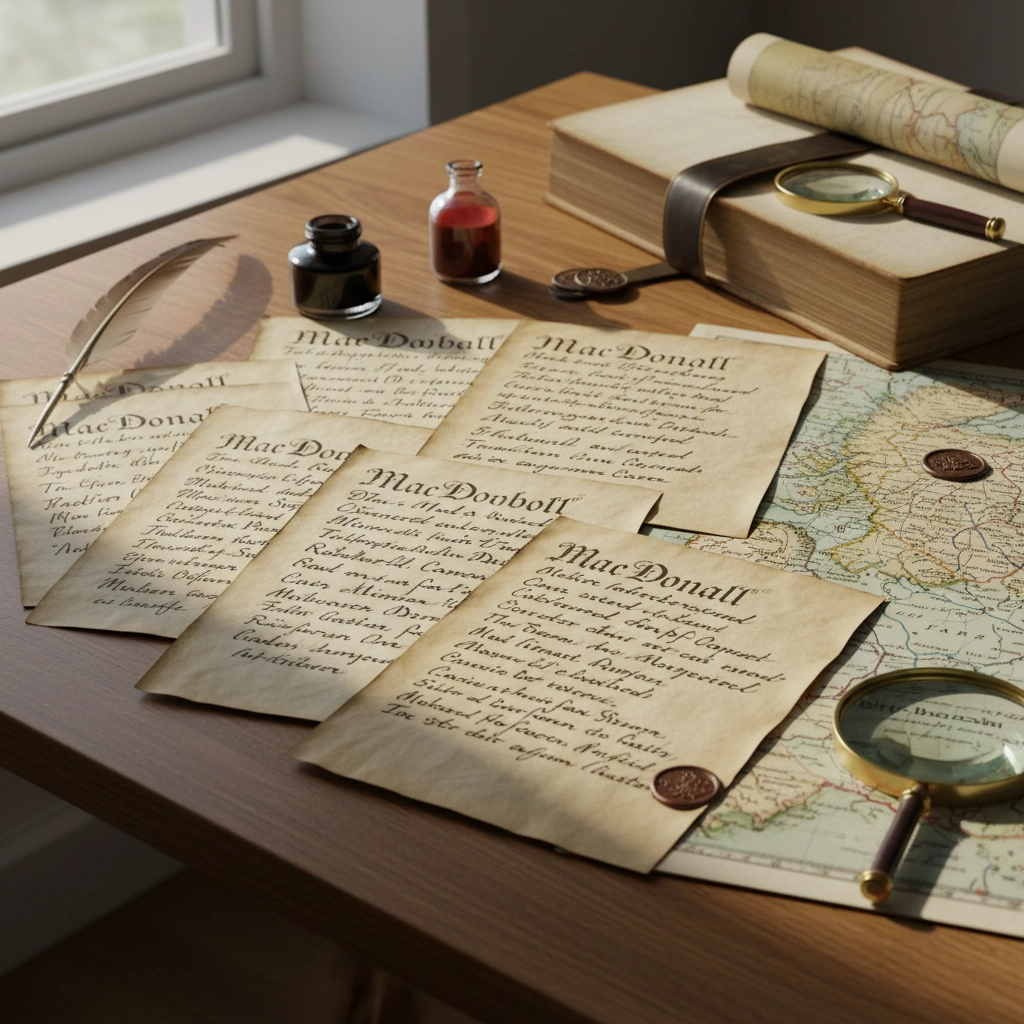
Here's a reality check: most people couldn't read or write until the end of the 19th century. When your great-great-grandfather told the immigration officer his name was "MacLeod," it might have been recorded as "McCloud," "MacCloud," or even "Loud" depending on the clerk's interpretation and regional accent.

In Scottish records, a surname like "Wright" could appear as "Rite," "Right," or "Royte" across different documents. This inconsistency becomes even more pronounced when you factor in the journey from Scotland to Atlantic Canada, where multiple officials recorded the same name at different points.

The Fix: Create a master list of every spelling variation you encounter. Use online tools to generate phonetic alternatives: if you're researching "MacDonald," also search for "McDonald," "McDonell," "Macdonnell," and even "Donald." When searching Nova Scotia's Highland settler records, I've seen the surname "MacKenzie" appear in over a dozen different spellings within the same parish register.

image_1

Mistake #2: Ignoring Gaelic to English Anglicisation

This is where Scottish research gets really tricky. Many Highland and Island families anglicised their Gaelic surnames either before emigration or upon arrival in Atlantic Canada. MacIain became Johnson, Mac an tSaoir became MacIntyre, and Granndach became Grant.

The massive Highland Clearances of the 18th and 19th centuries sent thousands of Gaelic-speaking Scots to Atlantic Canada, particularly to areas like Antigonish County and Cape Breton Island, where Gaelic remained the primary language well into the 20th century.

The Fix: Research both the original Gaelic form and common English equivalents. Consult resources like "The Surnames of Scotland" by George Fraser Black, which provides extensive information on Gaelic origins. Remember that your "English" surname might actually be a completely different name in Gaelic. If your ancestor was named "Campbell" in Canadian records, their original Gaelic name might have been Mac Cailein.

Mistake #3: Not Accounting for Emigration-Related Name Changes

The journey from Scotland to Atlantic Canada wasn't a simple point-A-to-point-B affair. Your ancestor might have stopped in Glasgow, sailed to Halifax, then travelled to their final destination. At each stage, different officials recorded their name, often with varying degrees of accuracy.

Some families deliberately altered their surnames to sound more "English" or "Canadian" to avoid discrimination or simply to fit in better with their new communities.

The Fix: Trace your ancestor's journey backwards, step by step. Start with their earliest Canadian records and work your way back to Scotland. Check passenger lists, immigration records, and early settlement documents at each stage. Pay special attention to the spelling used in Scottish departure records versus Canadian arrival records: they're often different.

Mistake #4: Overlooking Transcription and Recording Errors

Even when your ancestor clearly stated their name, human error crept in. Scottish accents proved challenging for English-speaking clerks in Atlantic Canadian ports. The rolling "r" in "MacGregor" might have been recorded as "MacGrigor," or the soft "ch" sound in "MacLeod" could have been written as "MacLoed."

Later, when these handwritten records were indexed or digitised, additional errors occurred. A hurried clerk's "u" might be read as "n," turning "MacLauchlan" into "MacLachlan."

The Fix: Always examine original documents when possible rather than relying solely on transcribed indexes. Consider how Scottish pronunciation might have been misinterpreted: the name "Iain" (pronounced "Ian") might appear as "John" in some records. Look for patterns in the mistakes you find; certain combinations of letters were commonly confused by clerks.

image_2

Mistake #5: Failing to Research Siblings and Extended Family

This might be the most valuable tip you'll read today. Researching only your direct ancestral line is like reading every third page of a book: you'll miss crucial plot points. Siblings often emigrated together or in sequence to Atlantic Canada, and their records frequently contain information that your direct ancestor's documents lack.

Your great-grandfather's death record might simply list "Scotland" as his birthplace, but his brother's obituary could specify "Inverness-shire" or even name the exact parish.

The Fix: Research each generation thoroughly, including all siblings and their spouses, before moving to the next generation. This strategy is particularly powerful for Scottish research because families often maintained strong connections across the Atlantic. One sibling's marriage record might list parents' names that you couldn't find anywhere else, or a sister's death certificate might provide the Scottish parish of origin that unlocks your entire research.

Mistake #6: Jumping to Conclusions About Family Connections

Finding a "James MacDonald" in Scottish records who seems to fit your timeline doesn't mean you've found your James MacDonald. With common Scottish surnames like Stewart, Campbell, MacLeod, and MacDonald, dozens of families might share the same name in the same region during the same period.

This problem is amplified in Atlantic Canada, where certain surnames cluster in specific areas. Cape Breton Island, for instance, has hundreds of MacLeod families, many with identical given names recurring across generations.

The Fix: Never assume a connection based on name and approximate dates alone. Build your case using multiple pieces of evidence: exact dates, specific locations, spouse names, children's names, and occupations. Scottish parish records often contain detailed information that can help distinguish between families. Wait until you have solid proof before adding anyone to your family tree.

image_3

Mistake #7: Skipping Generations Due to Naming Patterns

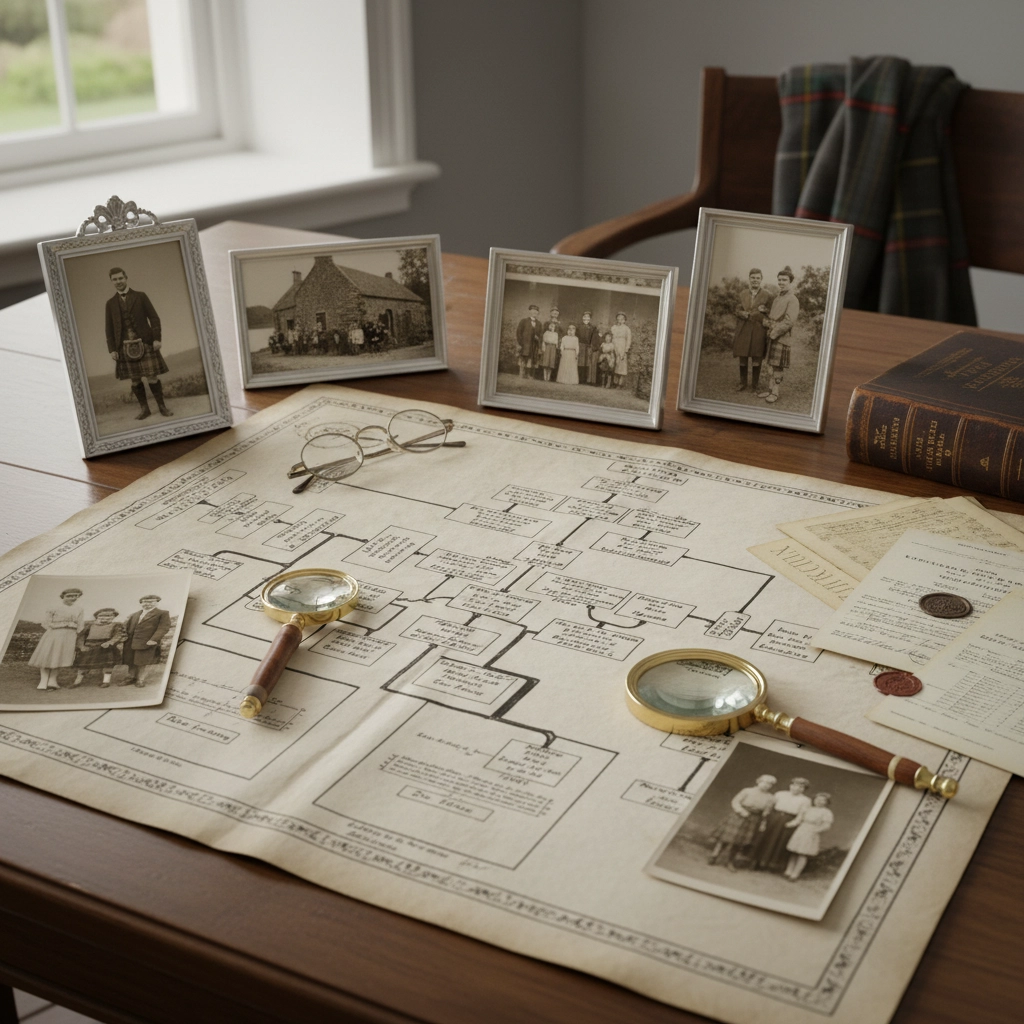
Scottish families followed traditional naming patterns that can trip up modern researchers. The first son was typically named after the paternal grandfather, the second son after the maternal grandfather, the first daughter after the paternal grandmother, and so on.

This means you might find multiple Jameses, Johns, or Marys within the same family across different generations. Without careful attention to dates and relationships, it's easy to confuse a grandfather with his grandson or to accidentally skip a generation entirely.

The Fix: Create detailed charts showing all family members with dates, locations, and relationships clearly marked. When you find multiple people with the same name in your research, don't assume they're the same person: they're often two different generations. Pay special attention during the emigration period, as this is where generational confusion most commonly occurs.

Understanding traditional Scottish naming patterns can actually help your research. If you find a John MacLeod naming his first son "Donald," there's a good chance that John's father was named Donald MacLeod.

Your Path Forward

Scottish surname research doesn't have to be a maze of confusion and dead ends. By avoiding these seven common mistakes, you'll find yourself making steady progress on even the most challenging family lines. Remember, every Scottish family that made their way to Atlantic Canada has left traces in the records: you just need to know where and how to look.

The connection between Scotland and Atlantic Canada runs deep, from the Gaelic-speaking communities of Cape Breton to the Presbyterian settlements of Prince Edward Island. Your Scottish ancestors weren't just names in a record: they were real people who made brave decisions to cross an ocean in search of better opportunities.

Start by reviewing your current research through the lens of these seven mistakes. You might discover that a "dead end" was actually just a spelling variation you hadn't considered, or that the sibling you ignored holds the key to your next breakthrough.

Every Highland clearance survivor, every Lowland farmer seeking new opportunities, and every Scottish tradesman who helped build Atlantic Canada's communities has a story worth discovering. Don't let common research mistakes prevent you from uncovering yours.

Small text: This post contains affiliate links. I may earn a small commission from purchases made through them, at no extra cost to you.
Small text: This blog post was written by Brian Nash, Chief Genealogist and Owner of How We Got Here Genealogy Services. For personalised help with your Scottish Atlantic Canadian research, visit us at howwegothere.ca.

Visual aid for finding **United Empire Loyalist ancestors**, a key topic in **Atlantic Canada** and Canadian genealogy research.
How to Find Your Loyalist Ancestors in Atlantic Canada: A Step-by-Step Guide

If you've ever wondered whether your family tree includes ancestors who fled north during the American Revolution, you're not alone. Atlantic Canada became home to thousands of United Empire Loyalists: American colonists who remained faithful to the British Crown during the turbulent 1770s and 1780s. These brave souls packed up their lives, often losing everything they'd built, and started fresh in what are now Nova Scotia, New Brunswick, and Prince Edward Island.

Researching Loyalist ancestry can feel like detective work, but it's incredibly rewarding. These ancestors left behind a rich paper trail, and with the right approach, you can uncover fascinating stories of courage, sacrifice, and new beginnings. Whether you're just starting your genealogy journey or you've hit a brick wall with Atlantic Canadian roots, this guide will help you navigate the unique resources available for Loyalist research.

Step 1: Start With What You Know

Before diving into archives and databases, take stock of your existing family knowledge. Loyalist ancestry often reveals itself through family stories passed down through generations. Look for clues like:

  • Family tales about ancestors who "came from America" in the late 1700s
  • References to military service during the Revolutionary War
  • Stories about losing property or businesses and starting over
  • Mentions of government land grants or compensation
  • Family surnames that appear on Loyalist lists

Create a timeline of what you know about your ancestors between 1775 and 1785. Even small details: like a birthplace in New York or Massachusetts: can provide crucial starting points for your research.

image_1

Step 2: Understanding the Key Records

Loyalist research requires familiarity with several unique record types that don't exist for other immigrant groups. These documents tell the story of displacement, military service, and resettlement:

Muster Rolls and Military Records
Many Loyalists served in provincial regiments alongside British forces. Muster rolls documented which soldiers were present at specific times and locations. These records often include ages, birthplaces, and family members: gold mines for genealogists.

Claims for Losses
Perhaps the most valuable Loyalist records are the claims submitted to the British government for property lost during the war. These detailed documents describe former homes, businesses, and possessions, painting vivid pictures of your ancestors' pre-war lives.

Land Grants and Petitions
The British government granted free land to Loyalists as compensation for their losses. These grants, along with associated petitions, provide settlement locations and sometimes family compositions.

Church Records
Many Loyalist communities quickly established churches. Baptismal, marriage, and burial records from these early congregations can fill gaps in official documentation.

Step 3: Major Archives and Repositories

Library and Archives Canada
The motherlode of Loyalist research sits in Ottawa. Their holdings include the original claims for losses, military records, and correspondence. Many of these records have been digitised and are searchable online. Start with their United Empire Loyalists research guide, which outlines available collections and search strategies.

Provincial Archives
Each Atlantic province maintains archives with region-specific Loyalist materials:

  • Nova Scotia Archives holds extensive records for Loyalists who settled throughout the province, including the massive influx who founded Shelburne
  • Provincial Archives of New Brunswick contains records for the Saint John River valley settlements and the founding of Saint John
  • Prince Edward Island Public Archives has materials for the smaller but significant Loyalist population on the island

New England Historic Genealogical Society
Don't overlook American repositories. NEHGS has extensive Loyalist collections, including transcribed muster rolls and published genealogies.

image_2

Step 4: Essential Online Tools and Databases

United Empire Loyalists' Association of Canada (UELAC)
This organisation maintains a comprehensive database of proven Loyalist lineages. Their website includes research guides, a certificate program for verified descendants, and contact information for local branches that can provide hands-on help.

FamilySearch
The free genealogy platform has digitised thousands of Loyalist-related records. Search their Canada Military Records collection and the various provincial record collections. Their wiki pages also provide excellent research guidance.

Ancestry and MyHeritage
These subscription services have indexed many Loyalist records, making them keyword-searchable. Look for collections like "U.S., Loyalist Claims Commission, 1776-1831" and various Canadian land records.

Google Books and Internet Archive
Many 19th and early 20th-century Loyalist histories and genealogies have been digitised. These published works often contain information not found anywhere else, though always verify details against primary sources.

Step 5: Research Strategies That Work

Follow the Military Connection
Most male Loyalists had some military involvement, even if brief. Start with British Army and Loyalist regiment records, then trace connections to land grants and civilian records.

Track the Family Unit
Loyalists often travelled in extended family groups. If you find one ancestor, search for siblings, parents, and cousins in the same records and locations.

Don't Ignore the Women
Female Loyalists appear in records more than you might expect. Widows submitted claims, women received land grants, and church records document their community involvement.

Use Geographic Clusters
Loyalists from the same American communities often settled together in Canada. If you find your ancestor in a specific Nova Scotia township, research other families from the same area: they likely shared American origins.

image_3

Common Pitfalls to Avoid

Assuming Every Early Settler Was a Loyalist
Not everyone who arrived in Atlantic Canada in the late 1700s was a Loyalist. Some were economic migrants, others came later from Britain or Ireland. Look for specific evidence of Revolutionary War-era displacement.

Relying Solely on Family Tradition
While family stories provide valuable clues, they're not always accurate. Always verify traditions against documentary evidence.

Overlooking Post-War Migration
Some families moved multiple times after the war. Your ancestor might have initially settled in Nova Scotia, moved to New Brunswick when it was created in 1784, then relocated again for better opportunities.

Neglecting American Records
Don't focus exclusively on Canadian sources. American records: town histories, probate files, military records: often provide crucial background information about your ancestor's pre-war life.

Advanced Research Tips

Explore Associated Families
Loyalist families often intermarried within their communities. If you're stuck on one line, research their neighbours and associates: marriage records might reveal family connections.

Check Multiple Spellings
18th-century record-keepers weren't always consistent with spelling. Search for phonetic variations of surnames and given names.

Look for Compensation Beyond Land
The British government provided various forms of assistance: provisions, transportation, tools, and even pensions for military service. These records might mention ancestors not found in land grants.

Making the Most of Your Research

Loyalist research requires patience and persistence, but the rewards are immense. These ancestors lived through one of North America's most tumultuous periods, making choices that shaped entire family lines. Their stories of loss, courage, and reinvention offer profound connections to our shared history.

Remember that Loyalist research often involves both American and Canadian records. Don't be surprised if your investigation takes you from a Nova Scotia land grant back to a New York probate file, then forward to a New Brunswick church record. These cross-border paper trails reflect the complex journeys our ancestors undertook.

As you dive into this fascinating research, keep detailed notes about sources and findings. Loyalist records can be scattered across multiple repositories, and you'll want to track where you've searched and what you've found.

Whether you're just beginning to explore potential Loyalist connections or you're ready to tackle advanced research challenges, remember that professional genealogists can help navigate complex cases and access records that might be difficult to obtain independently. At How We Got Here Genealogy Services, we specialise in Atlantic Canadian research and have extensive experience with Loyalist ancestry. Sometimes a fresh set of expert eyes can spot connections you might have missed or suggest new research directions that break through those stubborn brick walls.

Your Loyalist ancestors chose loyalty over convenience, often sacrificing everything for their principles. Their remarkable stories of resilience and new beginnings await your discovery in the rich archives of Atlantic Canada.

Service Spotlight: Custom Genealogy Brick Wall Busting, How We Help You Get 'Unstuck'

Welcome to Feature Friday! Each week, we shine a spotlight on the services, tools, and stories that make HowWeGotHere Genealogy special. Today, we're diving deep into one of our most popular offerings: custom brick wall busting.

You know that ancestor who's been driving you absolutely bonkers for months (or maybe years)? The one who seems to have vanished into thin air right when you need them most? The great-great-grandmother whose maiden name remains a complete mystery, or the grandfather who apparently materialized out of nowhere in 1920 census records?

Yeah, we've all been there. Welcome to the wonderful world of genealogy brick walls.

What Exactly Is a Genealogy Brick Wall?

A genealogy brick wall is that one ancestor who refuses to cooperate with your research efforts, no matter how many hours you spend searching online databases, scrolling through census records, or squinting at hard-to-read handwriting on vital records. It's the research roadblock that stops your family tree progress dead in its tracks.

These walls can pop up for all sorts of reasons: name changes, missing records, natural disasters that destroyed documents, immigration confusion, or sometimes just plain old clerical errors that throw off your entire search strategy. Whatever the cause, hitting a brick wall can feel like wandering through a genealogy maze blindfolded.

But here's the thing: and this is where we come in: most brick walls aren't actually permanent barriers. They're puzzles waiting for the right approach, the right resources, and sometimes just a fresh pair of experienced eyes.

image_1

Our Brick Wall Busting Approach: It's All About the Collaboration

At HowWeGotHere Genealogy, we don't believe in taking your research away from you and disappearing into a back room for weeks. That's not how real genealogy breakthroughs happen. Instead, our brick wall busting service is built around collaboration and partnership.

When you reach out to us with a stubborn ancestor, we start with what we call a "Research Review and Strategy Session." This isn't just us telling you what to do: it's a genuine conversation about your research journey so far.

Step 1: The Deep Dive Review

We begin by carefully examining all the research you've already completed. This means looking through your family tree software, reviewing those scattered notes and documents you've collected, and understanding the search strategies you've already tried. We're not here to redo work you've already done well: we're here to build on it smartly.

This review often reveals crucial gaps that aren't immediately obvious. Sometimes it's a missing spouse search, or a sibling who could hold the key to your ancestor's identity. Other times, it's realizing that you've been searching in the wrong time period or location entirely.

Step 2: Fresh Eyes, New Strategies

Once we understand your research foundation, we bring our expertise to the table with strategies you might not have considered. This could involve:

  • Cluster research (investigating your ancestor's neighbors, friends, and associates)
  • FAN Club methodology (Friends, Associates, and Neighbors approach)
  • DNA triangulation for biological connections
  • Deep-dive newspaper searches beyond just obituaries
  • Court records and estate files that often contain family relationship gold
  • Religious and community records that might not be digitized online

image_2

Real Success Stories: How We've Helped Clients Break Through

Let's talk about some actual wins, because this stuff really works.

The Case of the Missing MacDonald

Sarah from Halifax had been searching for her great-grandfather Angus MacDonald for over three years. She knew he'd immigrated from Scotland sometime in the 1890s, but every Angus MacDonald she found in Nova Scotia records didn't quite fit. The birth dates were wrong, the family compositions didn't match, and she was ready to give up.

During our strategy session, we noticed something interesting: Sarah had been focusing solely on "Angus MacDonald" in her searches. But what if immigration officials had recorded his name differently? What if he'd gone by a middle name, or anglicized his name slightly?

We expanded the search to include "Aonghas," "Angus MacConnell," and even "Angus Donald." Within two weeks, we found him: listed as "A. MacDonnell" in ship passenger records, with a slightly different birth year than Sarah expected. From there, we were able to trace his entire family line and connect him to specific clan records in Scotland.

The Acadian Connection Mystery

Jean-Baptiste from New Brunswick knew his family had Acadian roots, but every trail seemed to dead-end around 1850. His ancestors seemed to appear in records without any prior history, which is unfortunately common for families affected by the Deportation.

Our approach involved diving into less-obvious sources: Catholic church records from Louisiana, land grants in Prince Edward Island, and even Acadian census substitutes that most amateur researchers don't know exist. We also used DNA matches to identify cousins whose families had preserved more complete oral histories.

The breakthrough came when we found his ancestor listed under a slightly different surname spelling in Louisiana church records, which led us to pre-Deportation records in Grand-Pré. Jean-Baptiste went from having a 1850s dead-end to tracing his family back to 1600s France.

image_3

What Makes Our Service Different

Personal Touch, Not Assembly Line

Unlike larger genealogy services that might assign your case to whoever's available, you'll work directly with experienced genealogists who get to know your specific research challenges. We remember your family stories, understand your research goals, and celebrate your victories along the way.

Teaching, Not Just Finding

We don't just hand you answers: we show you how we found them and teach you techniques you can use for future research. Every brick wall session includes explanations of our methodology, so you're building skills for your ongoing genealogy journey.

Maritime and Atlantic Canada Expertise

While we work with families from all backgrounds, our team has particular strength in Maritime and Atlantic Canada research. We understand the unique challenges of researching Acadian families, Scottish Highland immigrants, Irish famine refugees, and the complex record-keeping quirks of our region.

Realistic Expectations, Real Results

We're honest about what's possible and what isn't. Some brick walls take weeks to crack, others might take months, and occasionally, we encounter ancestors who truly may be lost to history. But we've found that with persistence, creativity, and the right resources, most genealogy puzzles have solutions.

Getting Started: What to Expect

Our brick wall busting service starts with a one-hour consultation where we review your research and develop a customized strategy. From there, we work in focused research blocks, keeping you updated on progress and new discoveries along the way.

Pricing is transparent and based on research hours, so you're never surprised by costs. We also offer payment plans for larger projects, because we believe everyone deserves the chance to discover their family history.

image_4

Ready to Bust Through Your Brick Wall?

If you've got an ancestor who's been keeping you up at night, wondering where they came from or where they went, don't let frustration win. Every family tree has these challenging puzzles, and most of them can be solved with the right approach and resources.

Hitting a wall is inevitable in genealogy, but it doesn't mean defeat. It just means you need a fresh perspective and some specialized tools. That's exactly what we're here to provide.

Ready to turn that brick wall into a breakthrough? Reach out to us and let's start planning your research strategy. Your ancestors are out there waiting to be found: sometimes they just need the right detective on the case.

Remember: uncovering your family history is a journey, not a sprint. Every record and every story brings you closer to understanding who you are and where you came from. Let's solve this puzzle together.


Ready to break through your brick wall? Book a free consultation with our friendly team at https://bookings.howwegothere.ca.

Names have been changed to protect the privacy of our clients.

Throwback Thursday: Recreating a 150-Year-Old Photo of My Ancestor in Halifax

Have you ever held an old family photograph and wondered what it would feel like to stand in that exact spot, looking out at the same view your ancestor once saw? This past summer, I had the incredible opportunity to do exactly that – and let me tell you, it was one of the most emotionally powerful moments of my genealogy journey.

I’m talking about my quest to recreate a 150-year-old photograph of my third great-grandfather’s business in Halifax, Nova Scotia. What started as simple curiosity about an old image turned into a profound connection with John Nash, an Irish immigrant who rose from humble beginnings as a laborer to become a respected Halifax alderman and successful business owner.

The Photo That Started It All

The photograph itself is remarkable – a clear image from the 1870s showing a building with “John Nash” proudly displayed across its facade at 77-79 Brunswick Street. But this wasn’t just any building; this was the culmination of John’s incredible journey from immigrant laborer to “city father.”

When I first saw this photo, I knew it was more than just a historical document. It was a treasure map, a direct link to understanding how someone could transform their life so dramatically in 19th-century Halifax. But more than that, it represented an opportunity to literally walk in my ancestor’s footsteps.

image_1

The Challenge of Photo Recreation

Recreating a photograph from 150 years ago isn’t just about finding the right location – it’s detective work that requires patience, research skills, and a bit of creative problem-solving. The Halifax of today looks vastly different from John Nash’s time, but the bones of the city remain remarkably intact.

My process began with careful analysis of the original photograph. I studied every detail: the angle of nearby buildings, the perspective of the street, and most importantly, the unchanging landmarks like the Halifax Citadel clock tower that still dominates the city skyline. These reference points became my anchors in mapping the past to the present.

The real breakthrough came when I discovered tools that help map old street numbers to their modern equivalents. Halifax’s street grid has remained relatively consistent, which meant that with enough research, I could pinpoint exactly where that photographer stood all those years ago.

Standing Where History Happened

The moment I found the spot and positioned myself where the original photographer had stood was absolutely electrifying. Suddenly, this wasn’t just about research or records – it was about occupying the same physical space where my ancestor had built his dreams.

Looking down Brunswick Street from that exact vantage point, I could almost see John Nash walking to his steam-operated bottling plant each morning. I could imagine him standing there proudly, perhaps discussing business with customers or surveying the building that represented everything he’d worked to achieve since arriving from Ireland decades earlier.

image_2

This is what makes photo recreation so powerful in genealogy – it transforms abstract research into visceral, emotional connection. Standing there, John Nash wasn’t just a name in a census record or a date on a death certificate. He was real. He was human. He had walked these same streets, breathed this same air, and looked out at views that I could still see today.
The Technical Side of Time Travel

For those inspired to try photo recreation themselves, here’s what I learned about the process:

Start with landmark analysis. Look for buildings, streetscapes, or geographical features that haven’t changed. In Halifax, the harbor, certain historic buildings, and that iconic clock tower provided crucial reference points.

Use modern mapping tools. Digital maps can help you understand how street numbering has evolved over time. Many cities have online archives that show historical street layouts alongside modern ones.

Consider the photographer’s position. Study the angles in your photo carefully. The height, distance, and perspective all provide clues about exactly where the camera was positioned.

Don’t expect perfection. Cities change, buildings get demolished, and streetscapes evolve. The goal isn’t to recreate an identical photo, but to connect with the place and moment your ancestor experienced.

image_3

Beyond the Photo: John Nash’s Remarkable Journey

What made standing in that spot even more meaningful was understanding the full scope of John Nash’s story. This wasn’t just about recreating a photo – it was about honoring an incredible immigrant success story.

John arrived in Halifax as a laborer, starting with nothing but determination and work ethic. By 1838, census records show him as a manual laborer, but by 1859, he was elected as alderman for Ward 2 – a position he would hold multiple times. He became an auctioneer, commission merchant, and eventually a successful business owner with his own steam-operated plant.

The building in that 1870s photograph represented the peak of his achievements. Sadly, John died in 1875, less than two years after opening his factory, but his legacy as someone who transformed himself from immigrant laborer to respected community leader lives on.

Why This Video Deserves Your Attention

I documented this entire journey in a YouTube video that frankly, I believe deserves way more views than it currently has. Not because I’m trying to boost my ego, but because it demonstrates something profound about what genealogy can become when we move beyond just collecting names and dates.

The video shows the entire process – from the initial research that uncovered John’s story, through the detective work of mapping the photograph, to that incredible moment of standing where he once stood. It’s about 7 minutes that capture what can happen when we approach family history as a lived experience rather than just an academic exercise.

image_4

The Ripple Effects of Connection

What surprised me most about this experience was how it changed my relationship not just with John Nash, but with genealogy itself. After standing in that spot, every record I found about him felt more significant. Every detail about his family, his business ventures, his role in Halifax politics – it all became more vivid and meaningful.

This is the magic of photo recreation. It takes us beyond the limitations of paper records and digital databases into the realm of spatial memory and emotional connection. When you can stand where your ancestors stood, you’re not just researching their lives – you’re participating in their story.

An Invitation to Halifax Stories

This experience also got me excited about an upcoming project. In October, I’ll be interviewing Craig Morrisey from More You See Genealogy on our podcast. Craig is from Newfoundland and works at The Rooms – Newfoundland’s cultural facility that houses incredible genealogical resources. We’ll be diving deep into Atlantic Canadian genealogy resources and sharing strategies for uncovering those hidden family stories that make our ancestors come alive.

image_5

Your Turn to Time Travel

Whether you’re researching Atlantic Canadian roots like John Nash’s story or tracing ancestors anywhere else, I encourage you to think beyond traditional records. Look for photographs, postcards, or even artistic depictions of places your ancestors lived and worked.

The tools for photo recreation are more accessible than ever. Digital archives, mapping software, and even smartphone apps can help you become a genealogical detective, piecing together the physical spaces where your family’s story unfolded.

Don’t underestimate the power of literally walking where your ancestors walked. It’s one thing to read that your great-great-grandfather owned a business; it’s entirely another to stand on the spot where he built his dreams and feel the weight of that history beneath your feet.

Making the Past Present

Photo recreation isn’t just about nostalgia or novelty – it’s about making genealogy a full-sensory experience that connects us more deeply with our family stories. When we can see through our ancestors’ eyes, stand where they stood, and look out at views they once knew, we transform from researchers into participants in an ongoing family narrative.

Every record and every story brings you closer to understanding not just where you came from, but how the courage, determination, and dreams of people like John Nash helped shape the person you are today. Sometimes, all it takes is standing in the right spot to feel that connection across the centuries.
Ready to dive deeper into your Atlantic Canadian roots? Check out the full video of my photo recreation journey, and don’t miss our upcoming October podcast episode featuring Craig Morrisey from The Rooms, where we’ll explore even more resources for uncovering your Maritime family stories.